Teaching & Workshops

Listening, playing, creating togetherWorkshops on improvisation, listening and collective creation for music schools, universities, ensembles, teachers and teams, in English, German and Spanish.

Where I have taught

Workshops, seminars and masterclasses at 22 universities, conservatoires and art institutions in Europe, Latin America, the Middle East and Asia, and as a teacher of the METRIC network for improvisation in European higher music education. METRIC is also where I keep learning as a teacher: I observe colleagues’ classes, exchange with lecturers from other conservatoires and accompany students from several countries.

On the word

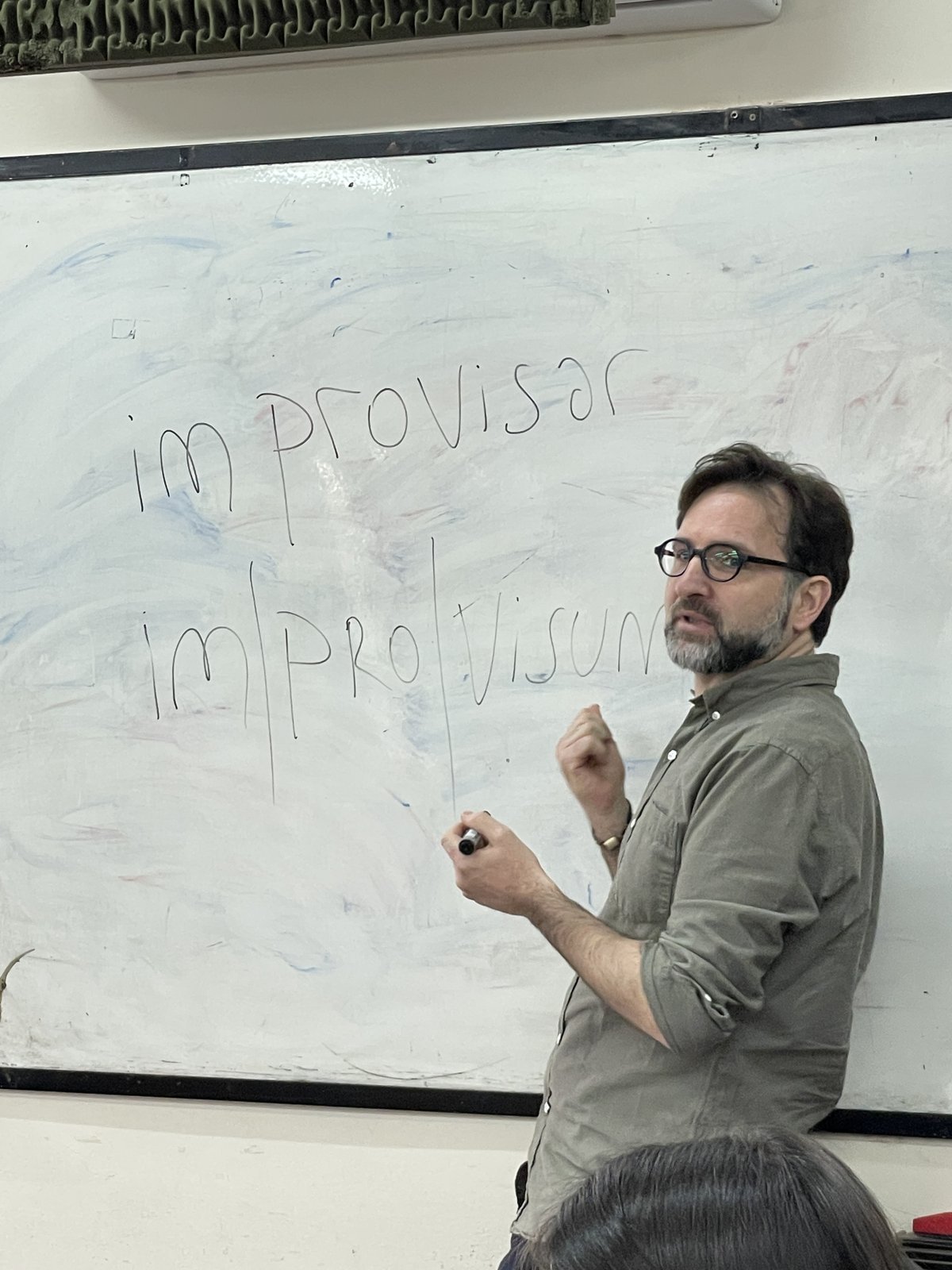
im·pro·visus

in- not  ·  pro- ahead  ·  visus, from videre, to see

Improvise goes back to the Latin improvisus, “unforeseen”. What is improvised is, literally, what cannot be seen coming.

Dictionaries describe improvising as doing something “instead of planning it in advance” (Oxford), “without preparation” (Duden) or “without study or preparation” (Real Academia Española). My work starts from the older sense of the word. Improvisation is not the absence of preparation, but a way of acting within the unforeseeable: listening closely, perceiving what is happening, and responding together as it unfolds.

Diego Kohn at a whiteboard where he has written improvisar and im | pro | visum
Argentina, 2023

How I work

01

Listening first

Every exercise starts from listening: to others, to the space and to oneself.

02

No right or wrong

Mistakes become material. The group learns to take risks without fear.

03

Shared responsibility

Decisions about form, roles and sound are made together, in real time.

04

Conditions, not recipes

TRICK (Trust, Respect, Independence, Collaboration, Kindness) shapes the space in which everyone can take part.

Workshops on offer

My most requested workshop, given at universities and conservatoires in Europe, Latin America and the Middle East: musicians of any style learn to listen, play and create together without a score.

«Para improvisar es mucho más valioso el tiempo que destinamos escuchando a los demás que la participación excesiva y constante.»

“When improvising, the time we spend listening to others is far more valuable than constant, excessive participation.”Participant, University of the Republic, Montevideo, 2026

About the workshop

Classical players, jazz and pop musicians, composers and electronic artists meet on common ground: listening. Through exercises, conversation and open improvisation, each participant expands their own sound language and learns to act inside a group with awareness, autonomy and responsibility.

A thematic version, Individuality and Collectivity, asks how a personal musical identity can grow inside collective work.

How a workshop unfolds

  • Solo introductions: each participant presents their own sound
  • Chains of duos and trios, and constellations that keep changing
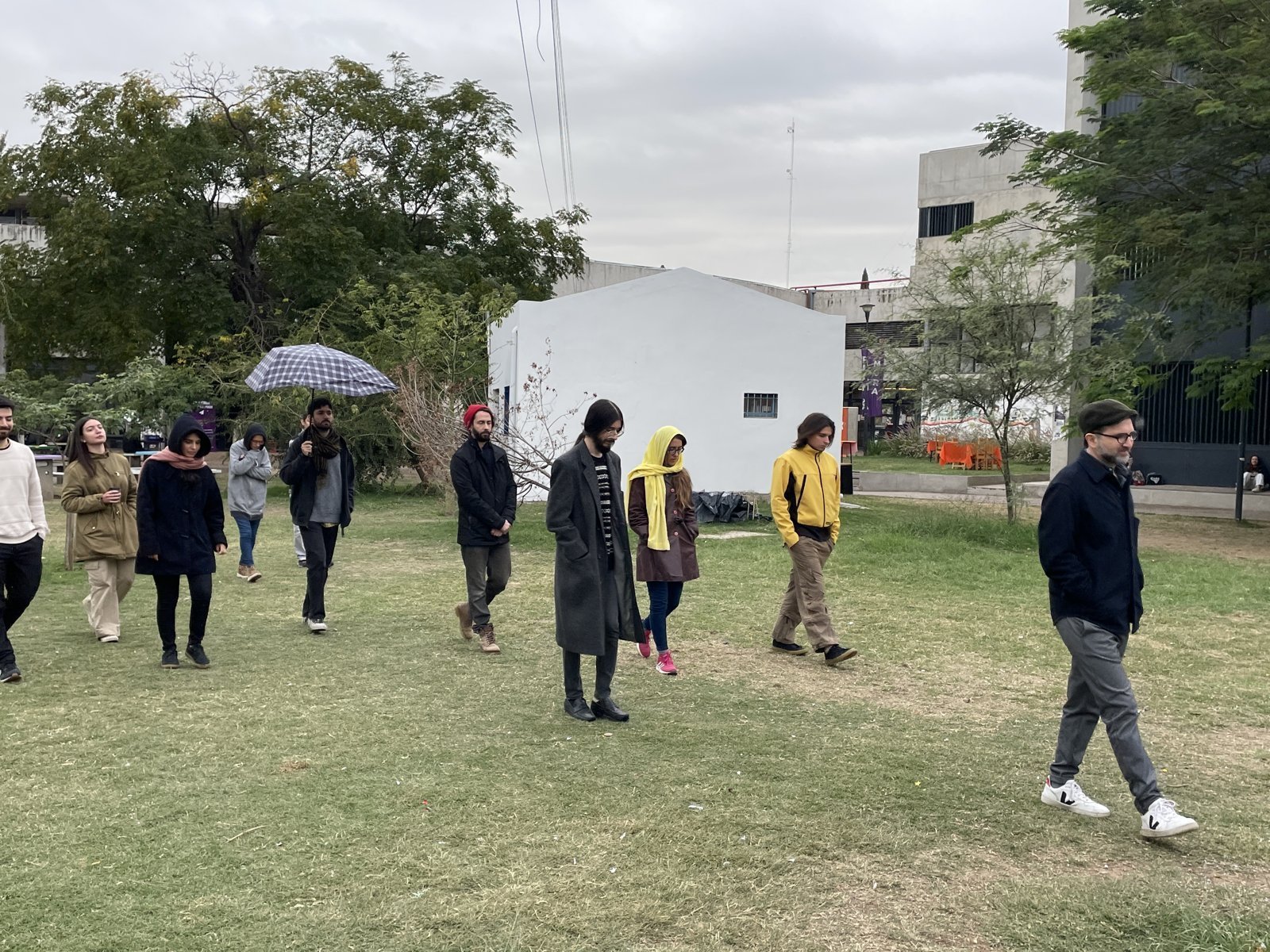
  • Listening to the room with eyes closed, and silent soundwalks through the building or the city
  • Tutti improvisations, guided by gesture or self-directed
  • A conversation after each round, and often a closing concert

Participants take away

  • A personal, flexible musical language
  • New ways of listening and responding
  • Tools to create music collectively in real time

A system of hand signs turns a group into a composer: the music is shaped together, in the moment.

About the workshop

Drawing on conduction and sign-based improvisation (Butch Morris, Walter Thompson, Santiago Vázquez) and on signs of my own, the group learns a small vocabulary that opens a large range of musical ideas. The system stays open: participants can invent their own signs.

It works for orchestras and ensembles of every level, and it can include fragments of the repertoire a group is already rehearsing.

Participants take away

  • A shared language for real-time composition
  • Awareness of roles, timing and form
  • A concert built by the group itself
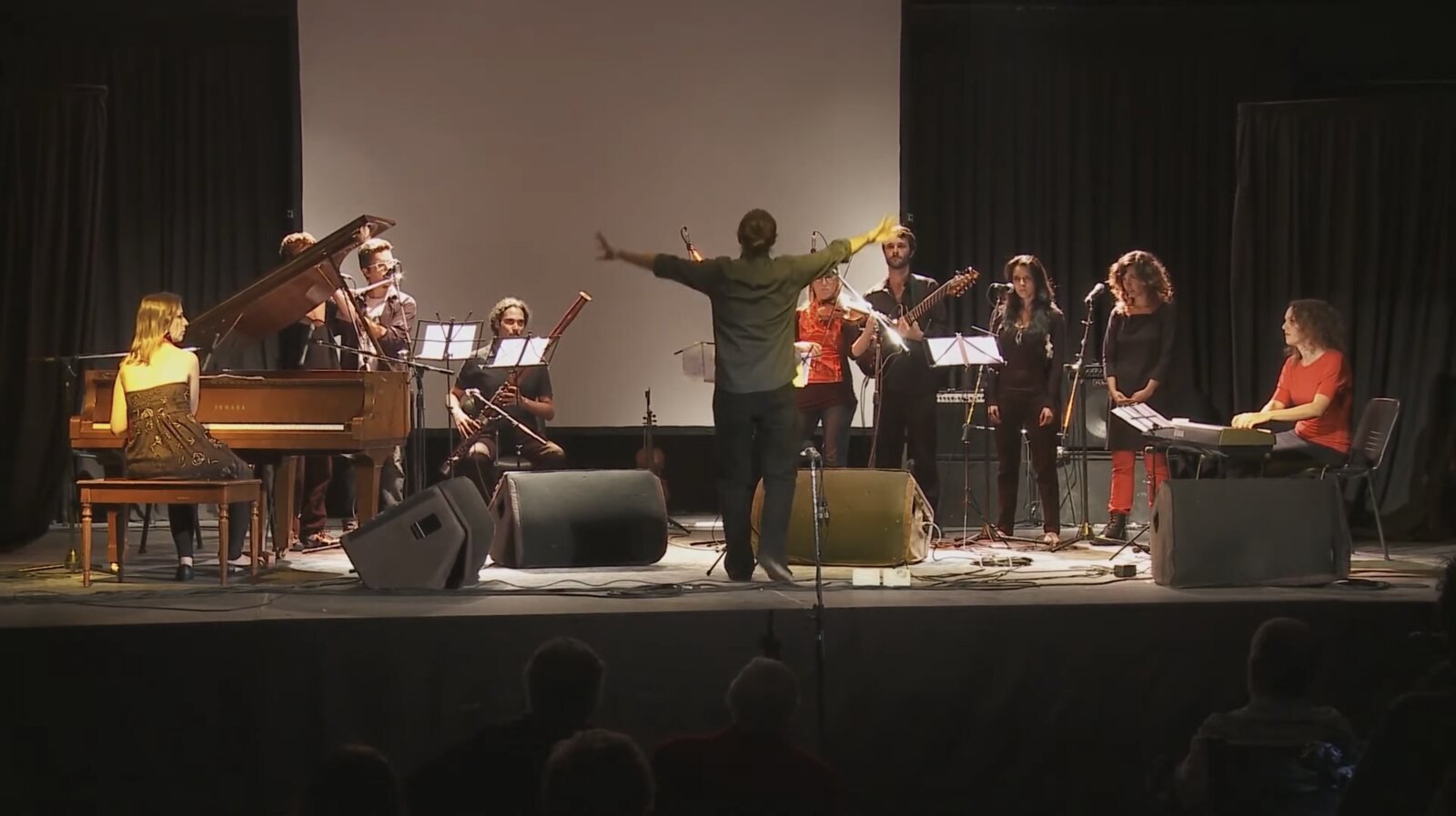
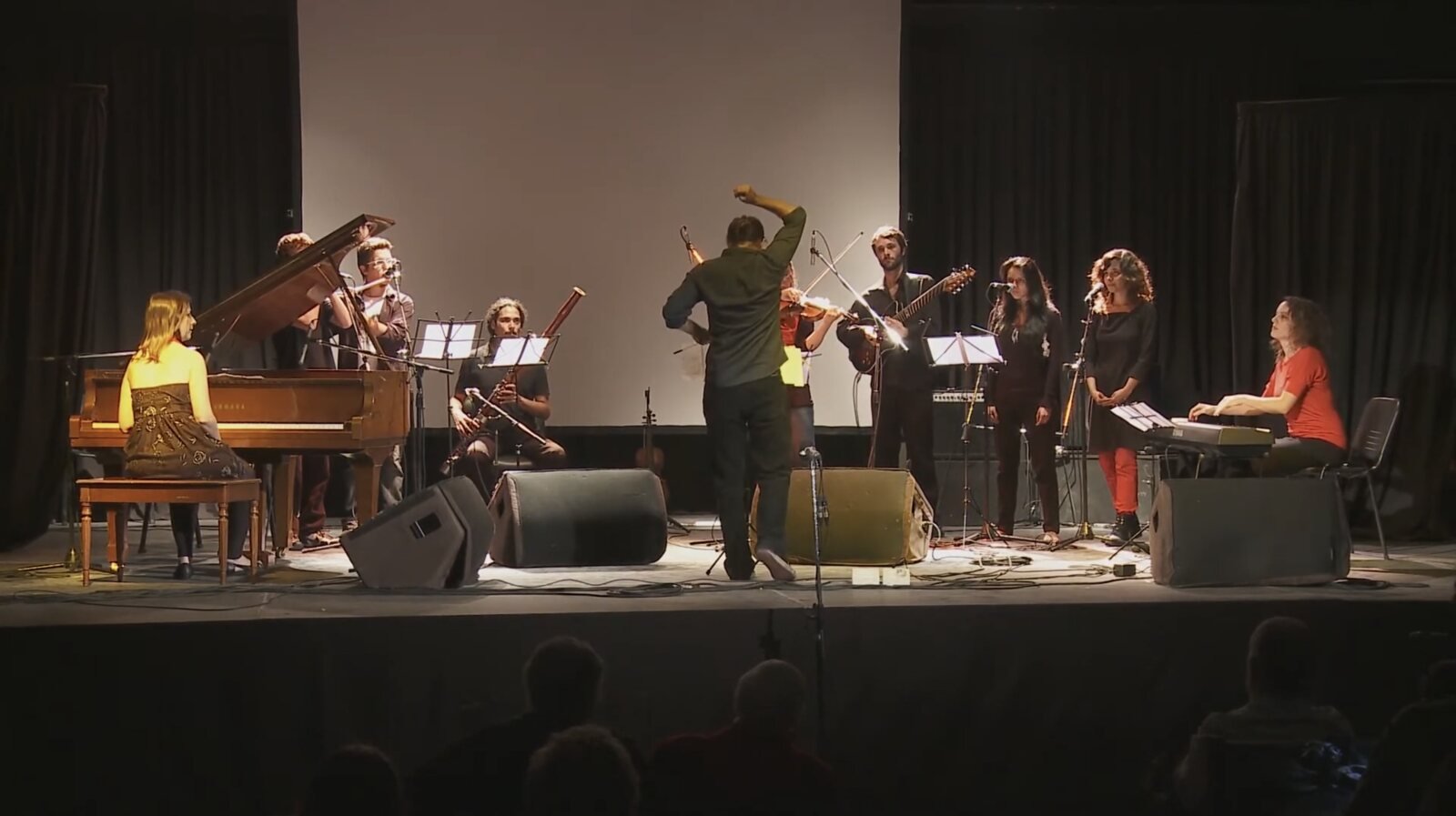
Diego Kohn conducting the Ensamble Argentino de Improvisadores with arms wide open: piano, flutes, bassoon, violin, guitar, voices and keyboard
Ensamble Argentino de Improvisadores, conducted by Diego Kohn
Diego Kohn giving a cue with a raised fist to the ensemble on stage
A cue for the whole ensemble
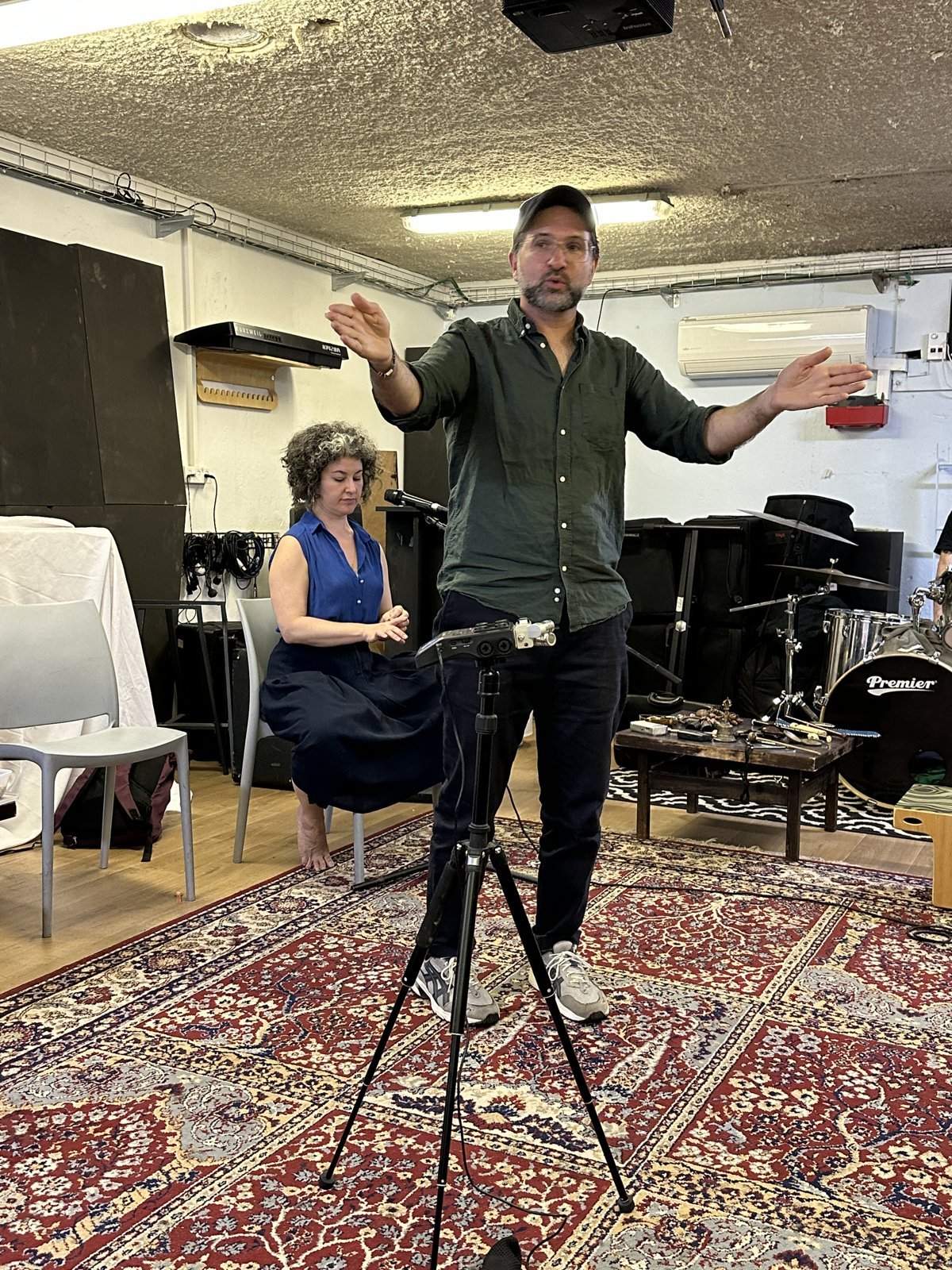
Diego Kohn conducting a group with hand signs, Conservatorio Astor Piazzolla, Buenos Aires
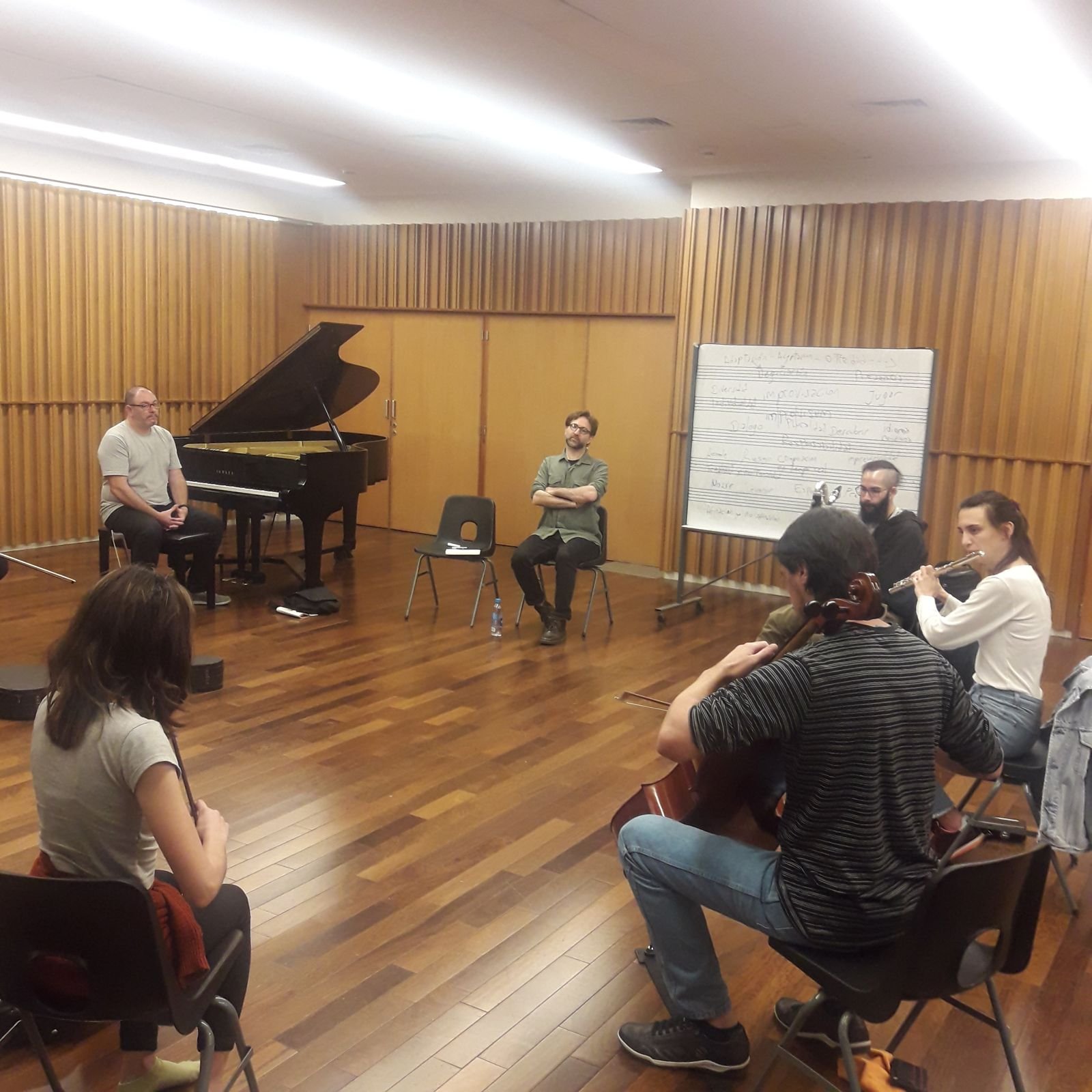
Workshop at the Conservatorio Astor Piazzolla, Buenos Aires, 2022

Already given at

WIM Zürich, Darmstadt Summer Course, Conservatorio Astor Piazzolla, Musikschule Konservatorium Zürich (young musicians), European Intuitive Music Conference, Basel

Request this workshop

Compovisation in practice

Ensamble Argentino de Improvisadores, conducted by Diego Kohn · Watch on YouTube
Spatialisation: the ensemble distributed in the space · Watch on YouTube
Compovisation with young musicians: a piece shaped with hand signs, Musikschule Konservatorium Zürich, 2022
Conduction workshop with improvising musicians, European Intuitive Music Conference, Basel 2021 · Watch on YouTube

Practices of listening and improvisation that create attention, participation and shared responsibility in a class, and that teachers can use the next day.

About the workshop

Teachers first experience the practices themselves, then reflect together on how to bring them into their own teaching. The exercises come from my work with students at Zurich University of the Arts and from the listening practice of Pauline Oliveros: listening to the room and the body, blindfolded soundwalks in pairs, listening cards, short collective improvisations and moderated reflection.

The workshop is based on TRICK (Trust, Respect, Independence, Collaboration, Kindness), the framework I use in higher music education. It shows how listening can become the ground for working together, in a class, a staff room or a project group. No advanced musical skills are needed; music teachers can take the improvisations further with their instruments.

Tools to take into the classroom

  • Listening exercises for the room, the body and the group
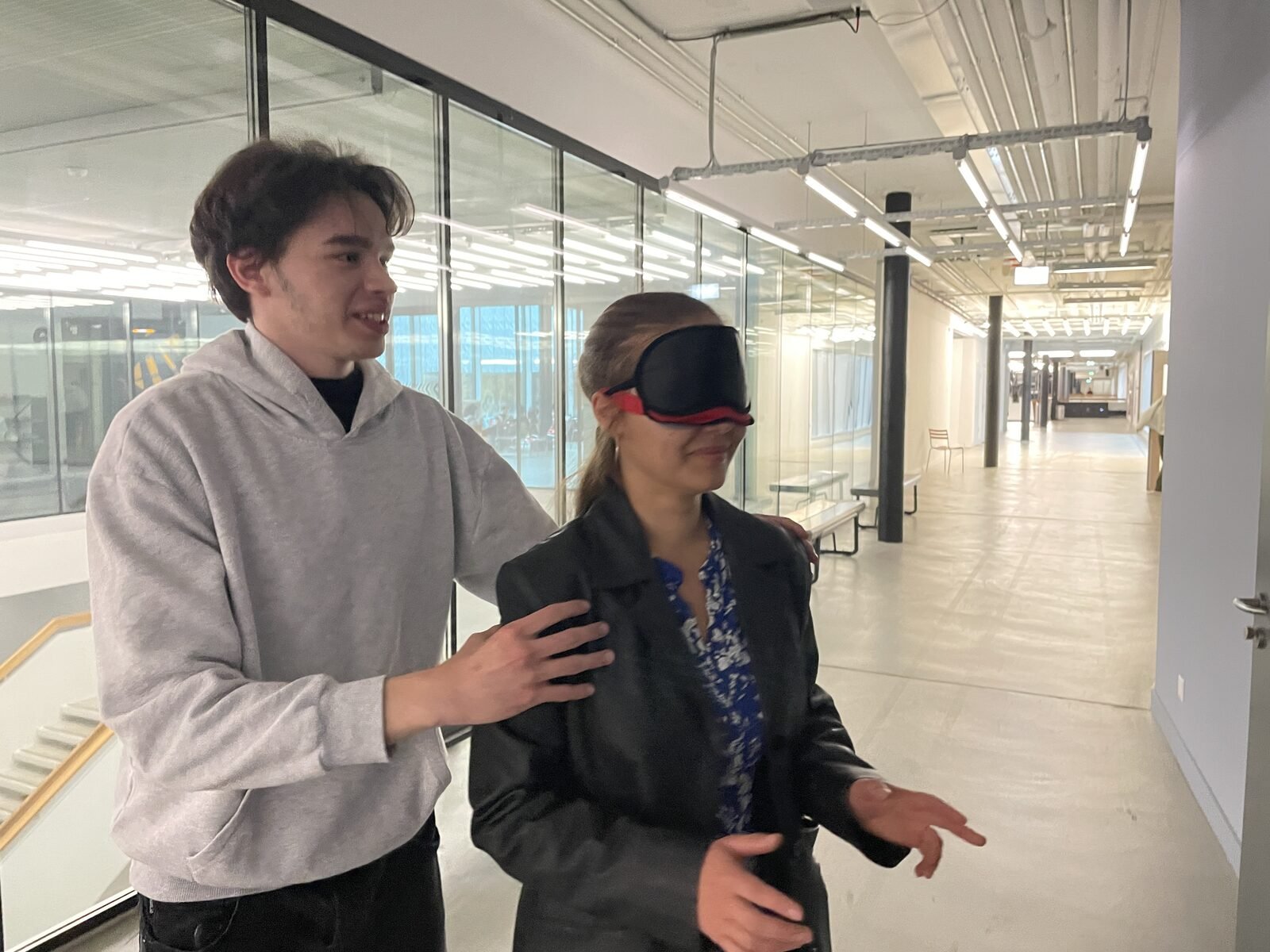
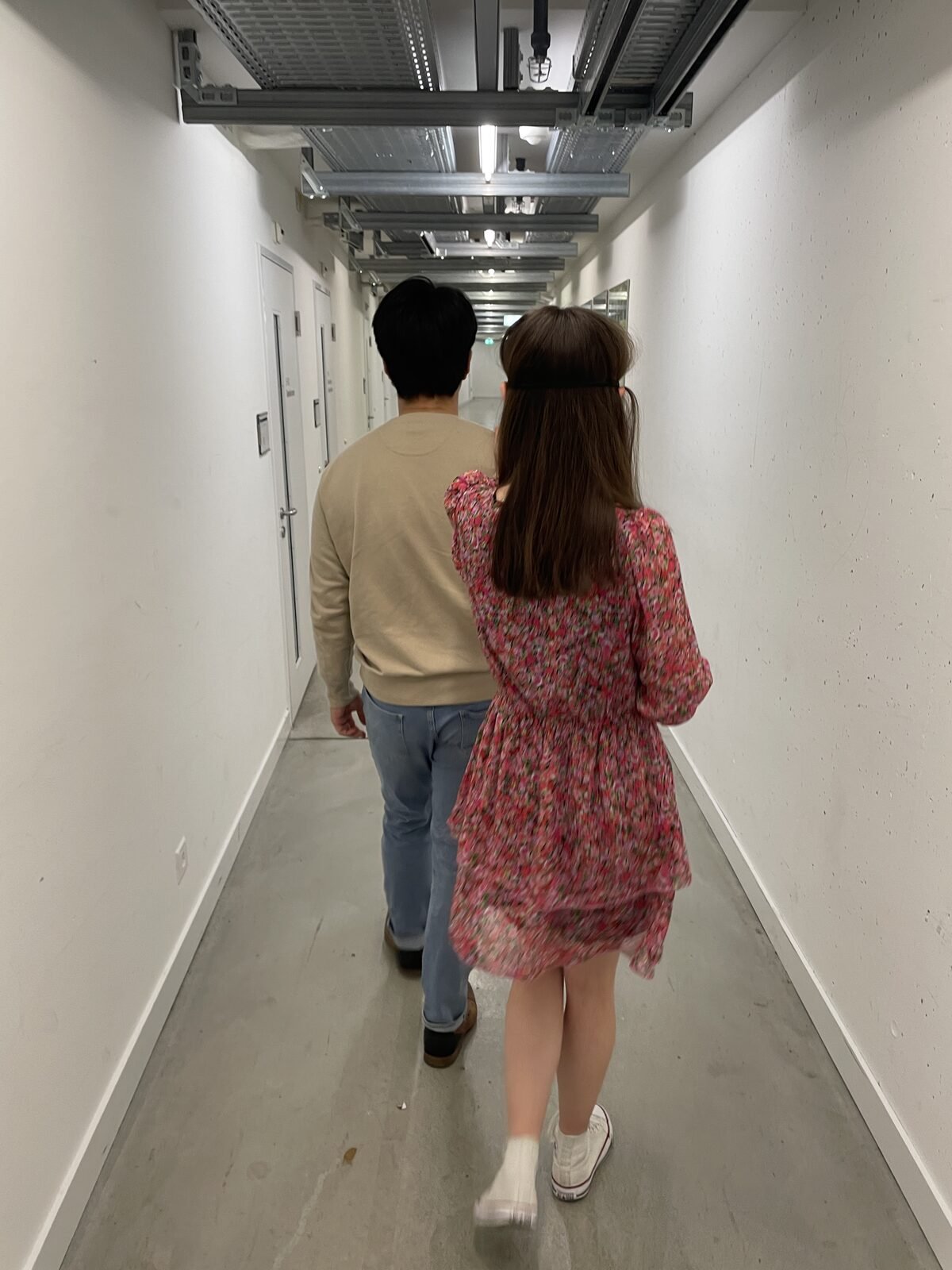
  • A soundwalk in pairs, one person with closed eyes, with clear agreements on safety and care
  • Listening cards: short written instructions for listening alone or together
  • Simple collective improvisations, with or without instruments
  • Ways to moderate reflection and feedback in a group

Participants take away

  • Concrete exercises to use the next day
  • A shared vocabulary for listening and collaboration
  • Ideas for adapting the practices to different ages, subjects and group sizes

For teams outside education, or for a team day without a teaching focus, see Team Listening.

Five students improvising in a circle in a wood-panelled room: tuba, clarinet, cello, bassoon and piano
Improvising in a circle, improvisation course, Zurich University of the Arts, 2024
A quartet improvising in class: piano, horn, viola and recorder, Zurich University of the Arts, 2025
Soundwalk with closed eyes on the roof of the Toni-Areal, the building of Zurich University of the Arts, 2023

Already given at

Zurich University of the Arts (improvisation courses); talks at the University of Music and Performing Arts Graz (KUG) and for the METRIC network

Request this workshop

Improvisation inside a familiar frame: riffs, ostinatos, call and response, and solos over a song form.

About the workshop

Students learn to keep the groove, listen to the band and take their first solos with confidence. Loops and simple forms give everyone, from beginners to advanced players, a place in the music.

Participants take away

  • Confidence to improvise
  • Sense of time and form
  • Playing as a band

Already given at

Musikschule Konservatorium Zürich (as part of Gruppen Improvisation)

Request this workshop

Young musicians discover unheard sounds on their instruments and invent music that does not exist yet.

About the workshop

Signs, graphic scores, miniatures and sound landscapes turn the rehearsal room into a laboratory. Each session moves from warm-up to new material, to a short performance and a moment of reflection.

As one participant put it: “kein richtig oder falsch”, there is no right or wrong.

Participants take away

  • Finer listening
  • Courage to experiment
  • A final concert of the group's own pieces
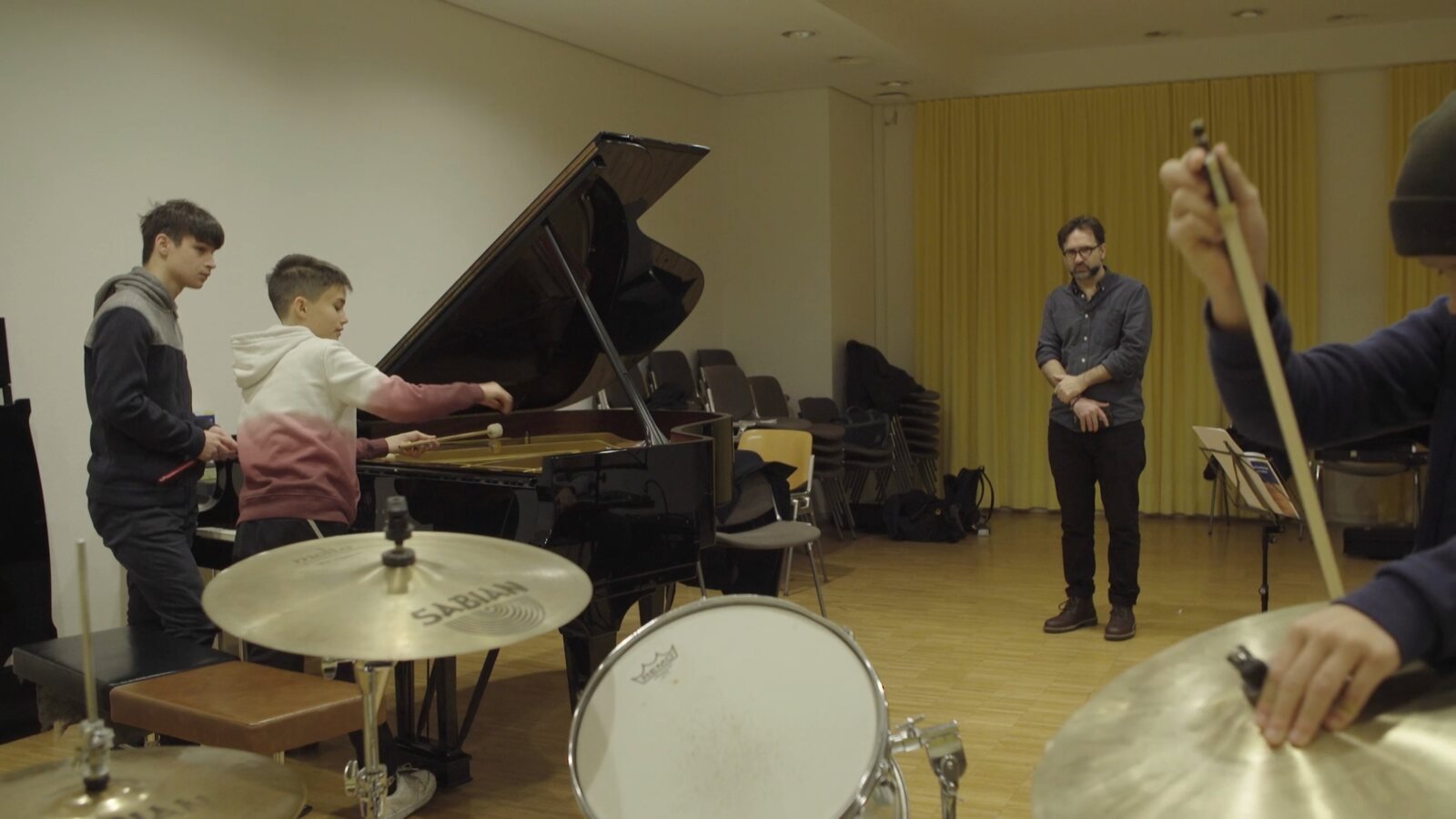
Young musicians exploring new sounds: a mallet inside the piano and a bow on a cymbal
New sounds on familiar instruments, Musikschule Konservatorium Zürich, 2022. Photo: Felix Hergert

A piece shaped with hand signs, closing concert 2022

An open laboratory where listening becomes a way of thinking, improvisation a way of being, and writing a form of resonance.

About the seminar

Each session opens a different way of listening. Every week combines a short reading, an artistic example, a listening practice to carry out in everyday life (a soundwalk, a sonic meditation, a silence in the middle of noise) and a resonance writing: a poem, a list, a map, a recording or a text score that carries the experience into words.

Readings are a lens, not a syllabus: Pauline Oliveros, Hildegard Westerkamp, Haytham El-Wardany, Brandon LaBelle, John Cage and others. Participants write their own text scores and listening cards, which other participants then carry out and answer. No musical training is needed.

Eight sessions (click to open)

  1. Listening to oneself

    A first step inward: one's own history as a listener, and the habits and places from which we hear. A few minutes of attentive listening, and a first short text on what listening means to each participant.

    Readings Pauline Oliveros, Some Sound Observations · Charles Baudelaire, «Crowds»

  2. Listening to the unforeseen

    Listening as an event that interrupts habits and cannot be controlled. Ten minutes of silence in an everyday place: what happened that could not be foreseen? The answer becomes a short critical text, a listening score or a sound piece of one to three minutes.

    Readings Pauline Oliveros, Deep Listening · Jacques Derrida, «Structure, Sign and Play» · Catherine Malabou, Ontology of the Accident

  3. The listening body

    A slower, bodily session. A sonic meditation, the body as a resonant space: listening with the skin, the feet and the breath until inside and outside blur. Then writing from the body: an image, a rhythm, a drawing.

    Readings Pauline Oliveros, Sonic Meditations · David Le Breton, Anthropology of the Body and Modernity · Don Ihde, Listening and Voice · Diego Kohn, A Point, a Circle

  4. Walking sound

    From situated to itinerant listening. A self-designed soundwalk of 20 to 30 minutes, attentive to one's own body, to the background and to the events of a place; optionally in pairs, one person guiding the other with eyes closed. Notes become lists, maps, drawings or recordings.

    Readings Hildegard Westerkamp, «Soundwalking» · R. Murray Schafer, The Tuning of the World · Rebecca Solnit, Wanderlust · Lucius Burckhardt, Why Is Landscape Beautiful?

  5. How to disappear: silence, absence, erasure

    Listening to what fades, is erased or resists in silence. Two exercises by Haytham El-Wardany, «How to Disappear» and «How to Break with a Group». Each participant writes a text score; another participant carries it out and answers.

    Readings Haytham El-Wardany, How to Disappear · Peter Ablinger, texts on audibility · Maurice Blanchot, The Writing of the Disaster

  6. Listening to the border: belonging, otherness, power

    Whose voice is heard, and what is allowed to sound? Three listening cards inspired by Marina Abramović's Method: listening to a limit, to another person in silence, and from the margins of a space. Participants write their own cards and perform those of others.

    Readings Brandon LaBelle, Acoustic Territories · with Walter Mignolo, bell hooks, Emmanuel Levinas and Jacques Derrida

  7. Listening to silence

    Silence as a practice of availability, not as absence. Topographies of silence: first the quietest place one can find, then a silence in the middle of noise. Writing a poem, a short meditation or a letter to silence.

    Readings John Cage, Silence · Susan Sontag, «The Aesthetics of Silence» · Jean-Luc Nancy, Listening · Sara Maitland, A Book of Silence · poems by Octavio Paz and Paul Celan

  8. Resonances and continuities

    No new material: a pause to listen back. Each participant records a short video with a personal map of the seminar and gives feedback. The final work brings together a critical essay, the folder of resonance writings and, optionally, a text score.

Participants take away

  • A personal practice of listening
  • A folder of resonance writings and their own text scores
  • Listening as a critical tool for their own field
  • Dialogue across disciplines
Promotional video for the seminar at 17 (Spanish, with subtitles)

A team stops, listens and talks: to the sounds of the place where it works, to each other, and to what usually goes unheard.

About the workshop

Teams spend most of their time talking, planning and deciding. In this workshop they listen. Together we explore the sound of the place where they work, practise simple listening exercises without instruments, and open moderated conversations about what listening means in daily work: who is heard, what gets lost in the noise, how attention is shared.

Listening becomes a way of meeting each other. The exercises create a calm, safe and attentive space in which colleagues can speak and be heard differently, beyond roles and routines, and take care of the space they share. My role is that of a facilitator and moderator: I propose, listen and hold the space, and the group brings its own experience.

How the workshop unfolds

  1. Arriving. Listening in silence to the room and the building, then naming what we heard
  2. Listening to the place. A short soundwalk through the workplace, in pairs, one person with closed eyes guided by a colleague
  3. Listening inwards. Short exercises on attention, breath and the body: what do I hear in myself before I respond?
  4. Listening to each other. Moderated conversations in small groups and in the circle, with simple agreements for speaking and listening
  5. Listening letters. Short written invitations to listen, exchanged between colleagues and carried out together
  6. Closing. What do we take back to our work? A shared reflection and, if the group wishes, a short collective sound piece

Participants take away

  • A shared experience of attention, trust and calm
  • Listening tools for meetings and everyday work
  • A new perception of their workplace and how they share it
  • Time for personal reflection, and more closeness within the team

The workshop can be part of a team day, a retreat or a further-education programme. Nothing is performed for an audience, and nobody needs musical experience. For teachers who want to bring these practices into their own classes, see For Teachers.

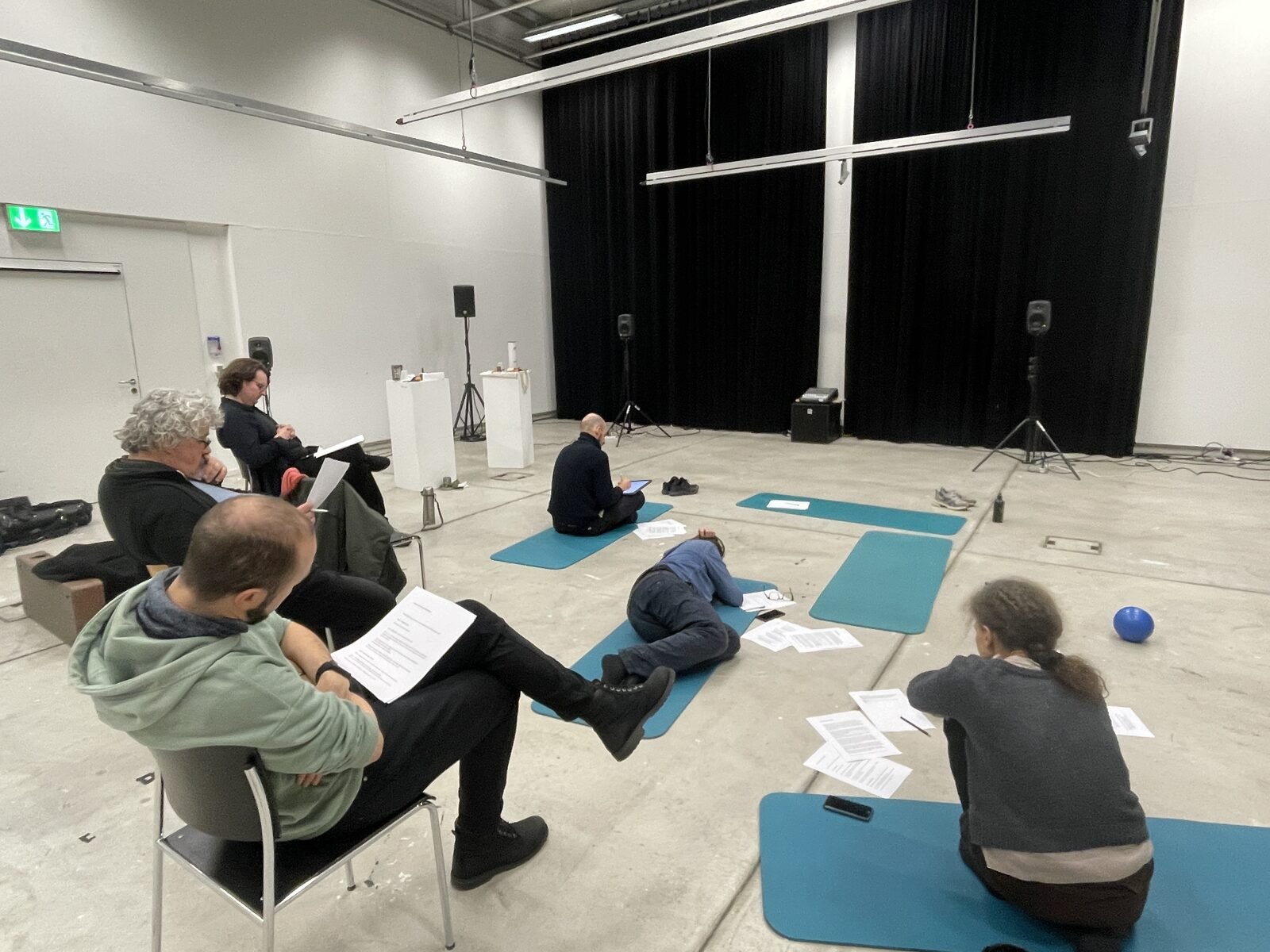
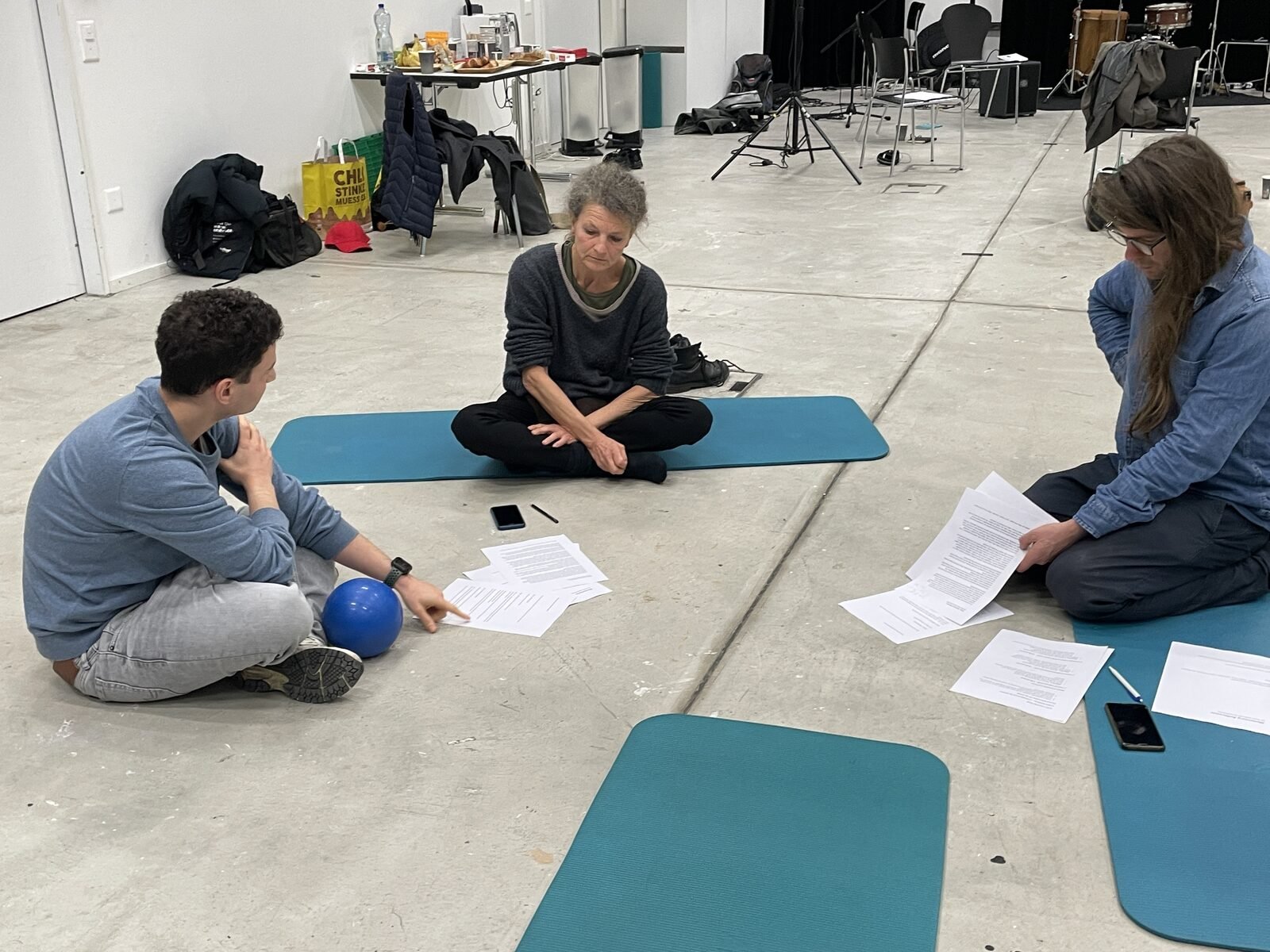
Participants sitting and lying on mats in a large hall, listening to the space
Listening session, Listening Across the Borders, Zurich University of the Arts, 2025
Sound massage: listening close to the ear, 2025

All formats can be adapted in length, level and language (English, German, Spanish). Get in touch to plan a workshop for your institution.

Archive

Workshops given since 2016, listed by date.

20262 entries

A three-hour workshop with music students, built around listening, interaction and collective creation. The Municipality of Vicente López documented it in a short film.

«Más que escuchar para reaccionar o responder, me resultó interesante escuchar para entender qué estaba pasando musicalmente en cada momento.»

“Rather than listening to react or respond, I found it interesting to listen in order to understand what was happening musically at each moment.”Participant, trumpet

Short film: Municipality of Vicente López

Students improvising in a circle
In the circle
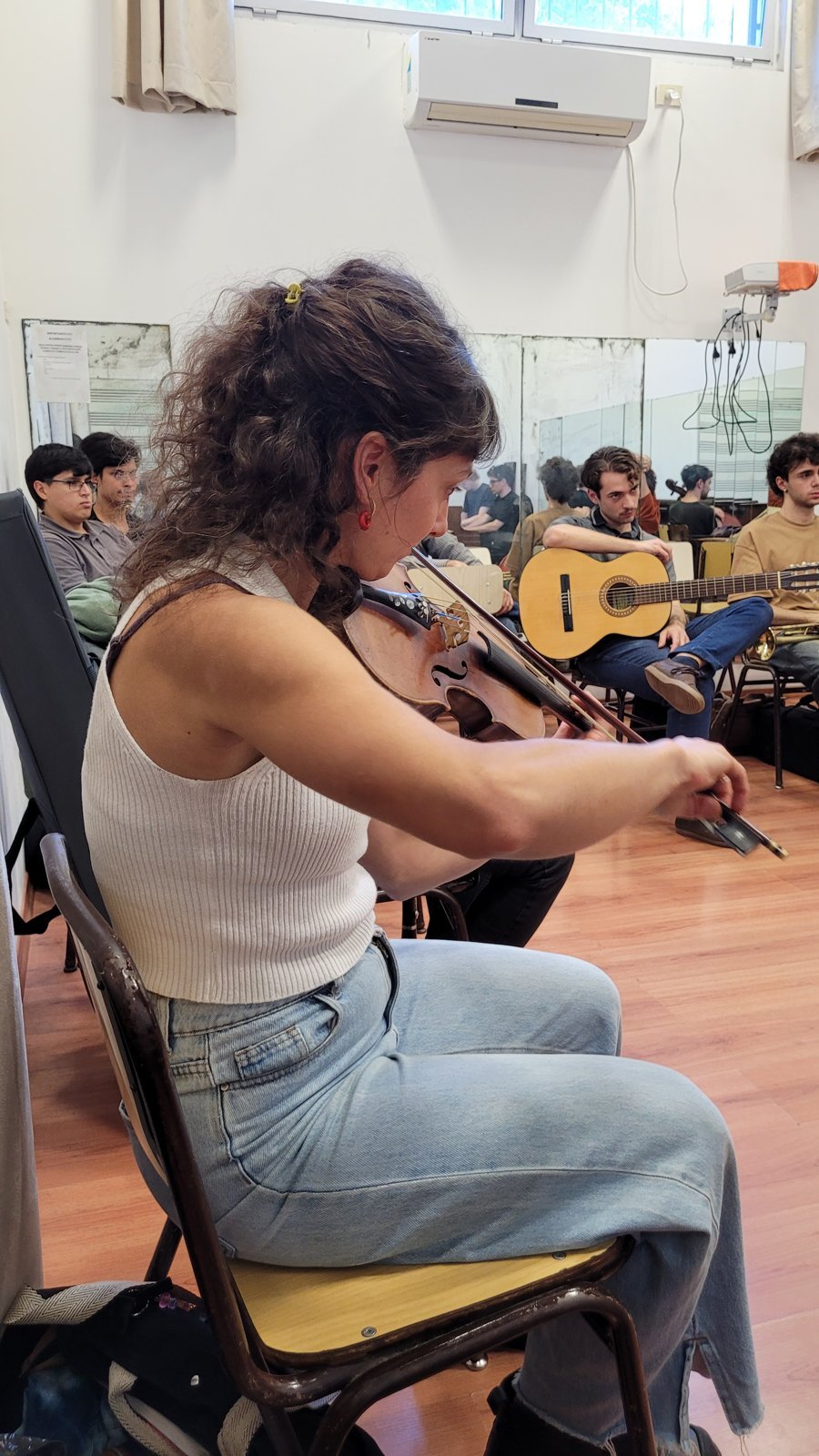
A participant playing the violin
Vicente López, April 2026
Participants seated in a circle in the classroom
The circle

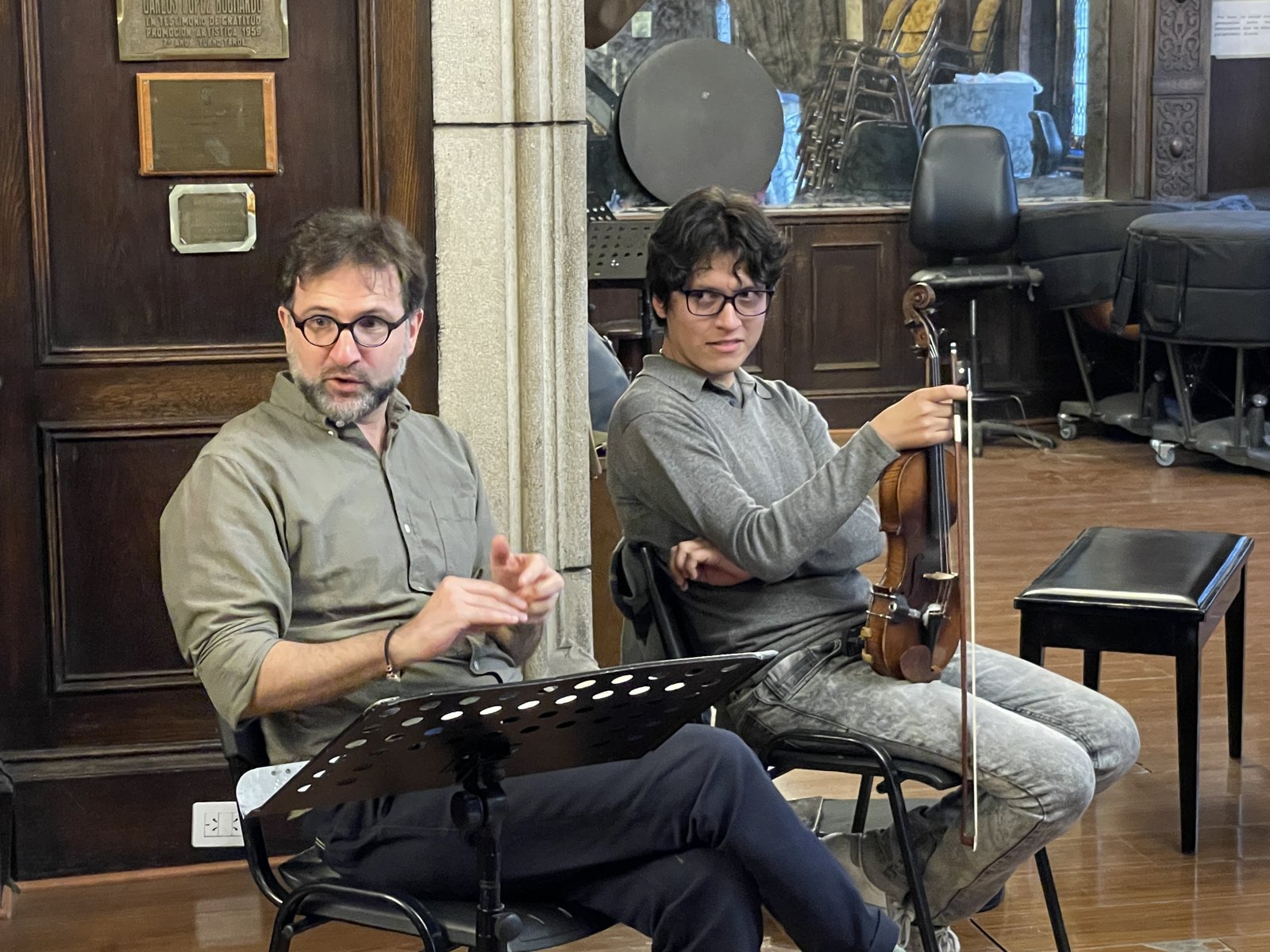
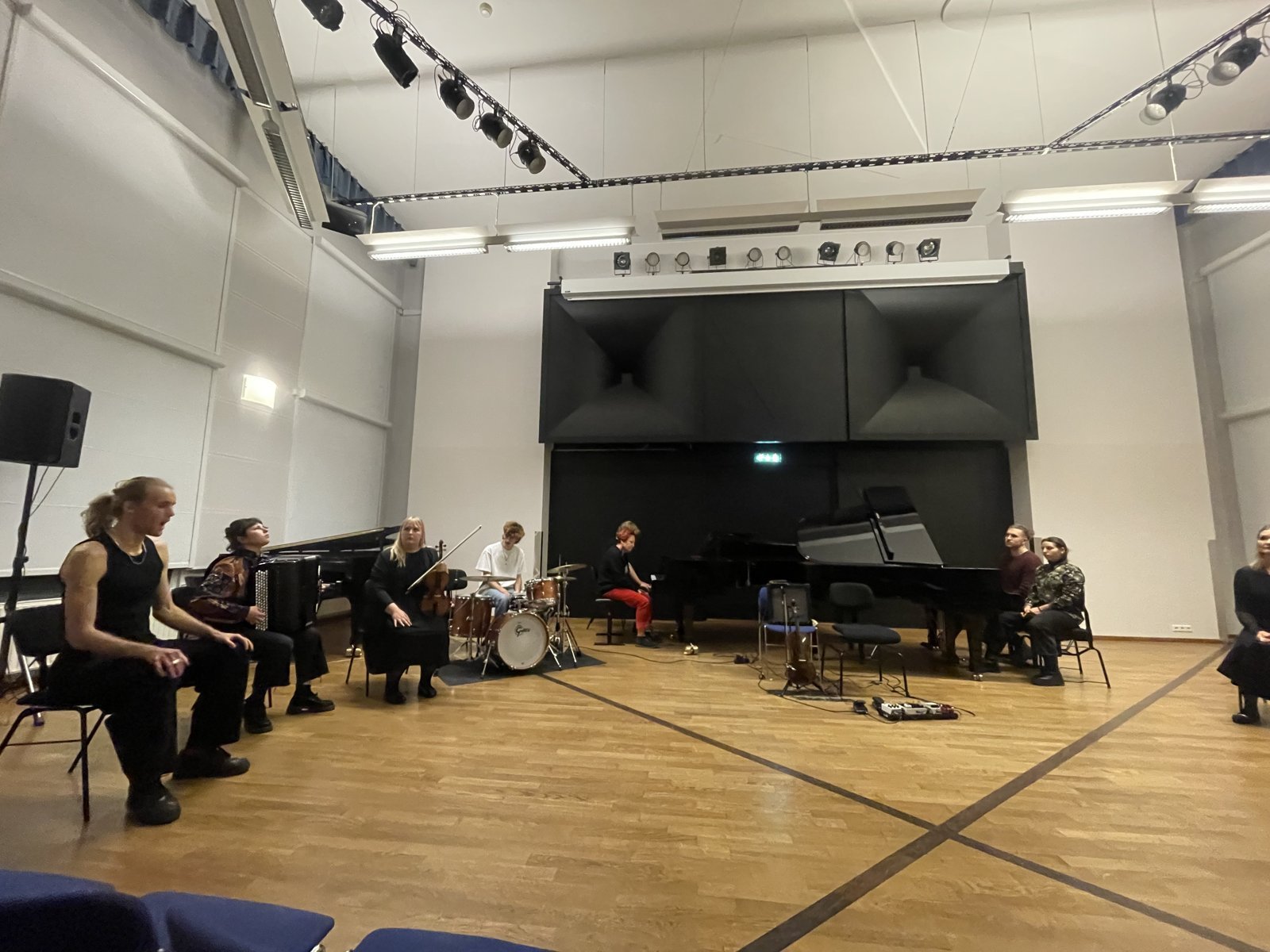
Two meetings with a mixed group of students, hosted by the Department of Theory and Composition: solo introductions, chains of duos and trios, listening to the room with eyes closed, and small constellations on stage. The visit closed with a concert by Diego Kohn and guests at the FARTES auditorium.

«Para improvisar es mucho más valioso el tiempo que destinamos escuchando a los demás que la participación excesiva y constante.»

“When improvising, the time we spend listening to others is far more valuable than constant, excessive participation.”Participant, guitar and composition

Links

Participants and Diego Kohn seated in a circle on stage
Montevideo, April 2026
Flyer: Prácticas de la improvisación, workshop on 13 and 14 April and concert on 14 April 2026, Faculty of Arts, University of the Republic
Flyer, April 2026
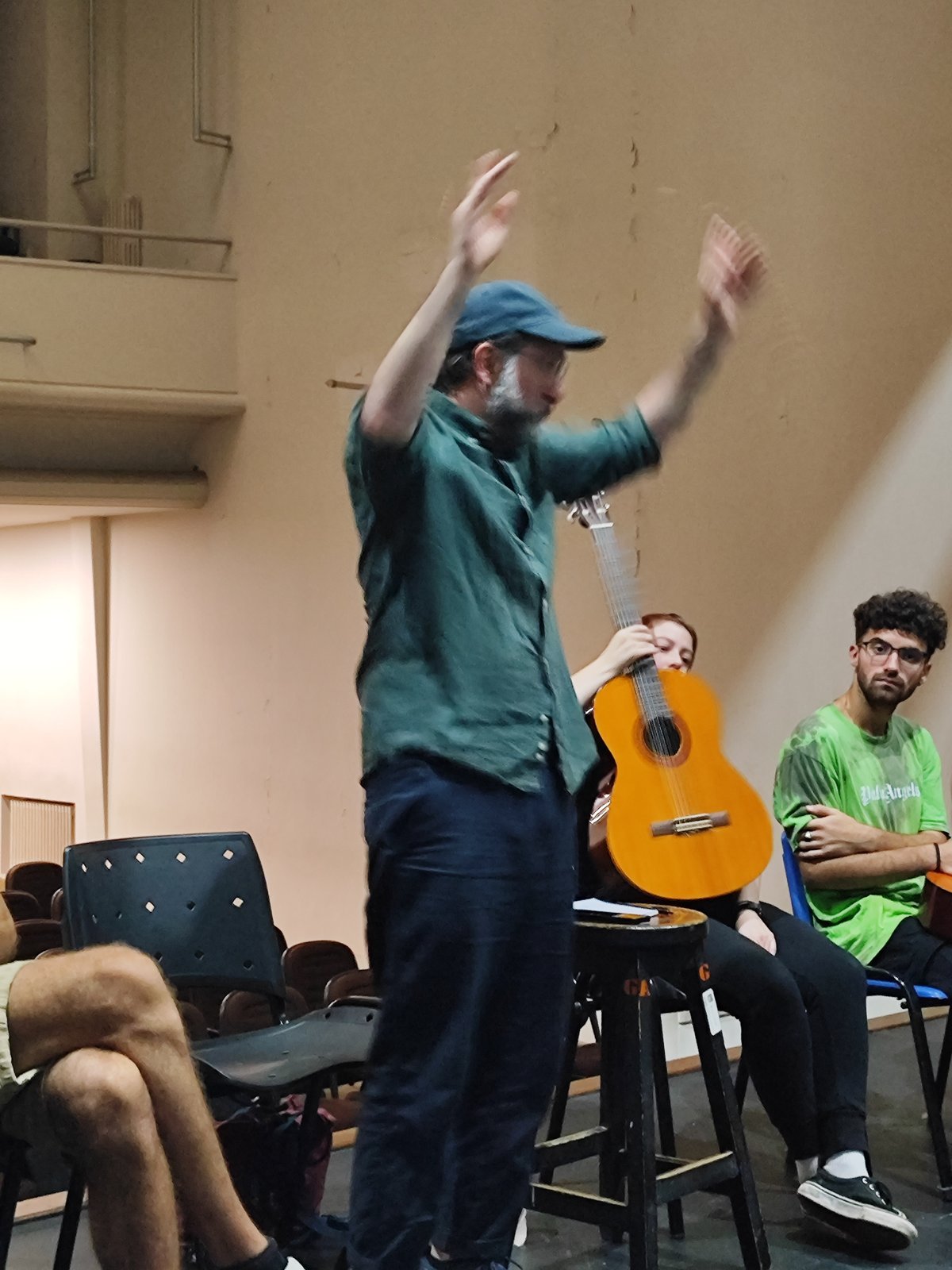
Diego Kohn explaining an exercise with a gesture
Moderating
Workshop participants
The participants

20252 entries

An eight-week online seminar for 17, Institute of Critical Studies, conceived as an open laboratory of listening, improvisation and writing. Each week explored a different way of listening: to oneself, to the unforeseen, through the body, while walking, to what disappears, at the border, and in silence. Participants from the visual arts, writing, philosophy, psychology and music turned each listening practice into a «resonance writing», and wrote text scores that other participants then carried out.

Promotional video, Spanish with subtitles

Twelve hours with two international groups of students at the METRIC Intensive Programme 2025, hosted by the Sibelius Academy in Helsinki. Over three sessions, one group moved from the individual to the collective and towards a balance between both: solo introductions, chains of duos, a soundwalk through the academy, and shifting constellations, first guided by gesture, then self-directed. Diego Kohn also mentored the students of Zurich University of the Arts, played in the teachers’ concert and served on the network’s Steering Committee.

«Es un espacio donde la técnica pasa a un segundo plano y lo importante es la interacción, la creatividad y la capacidad de construir algo colectivo en el momento.»

“It is a space where technique takes second place and what matters is interaction, creativity and the ability to build something together in the moment.”Participant, trumpet, METRIC Intensive Programme 2025
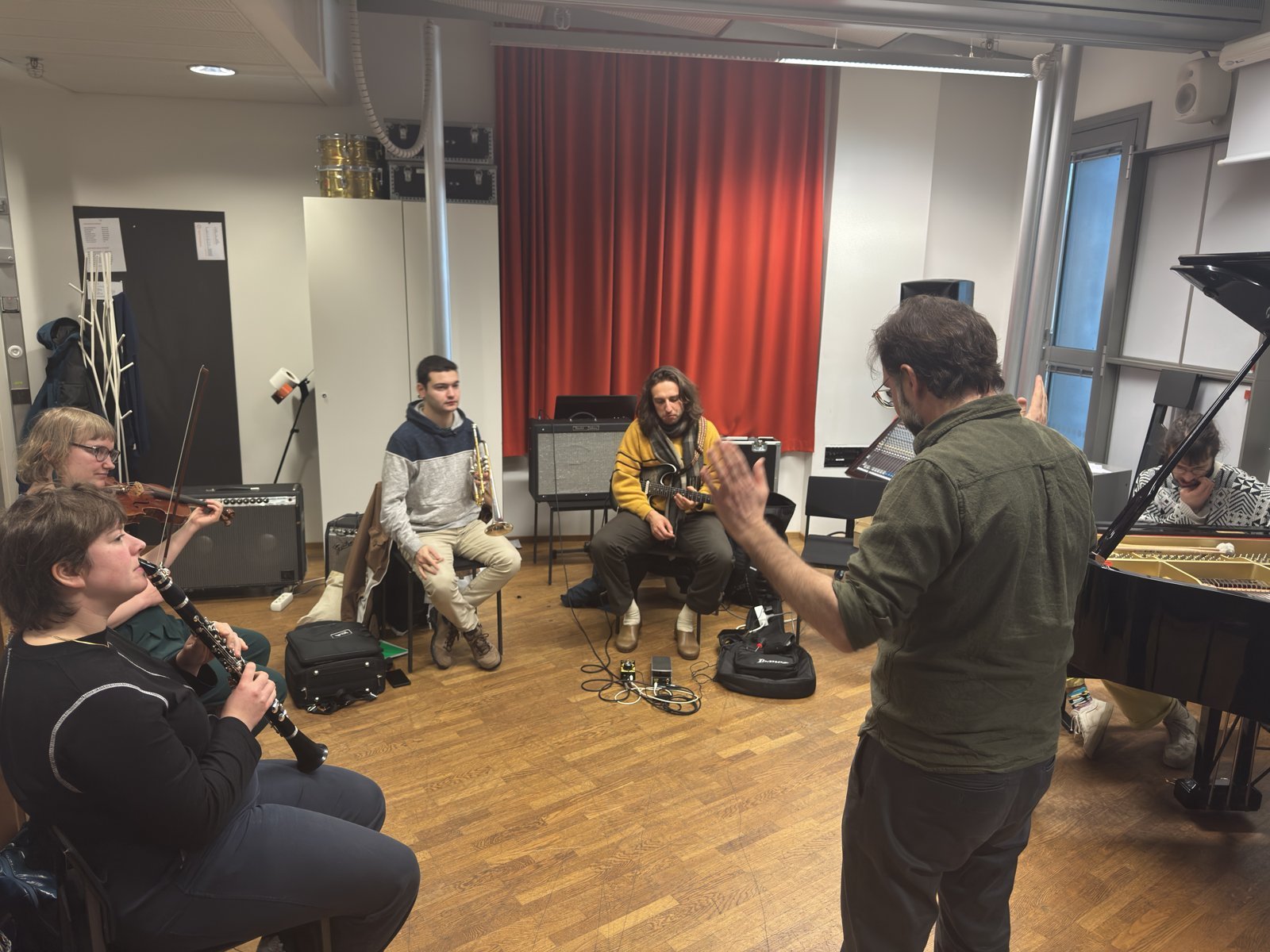
Diego Kohn guiding a group of students with gestures
Shifting constellations
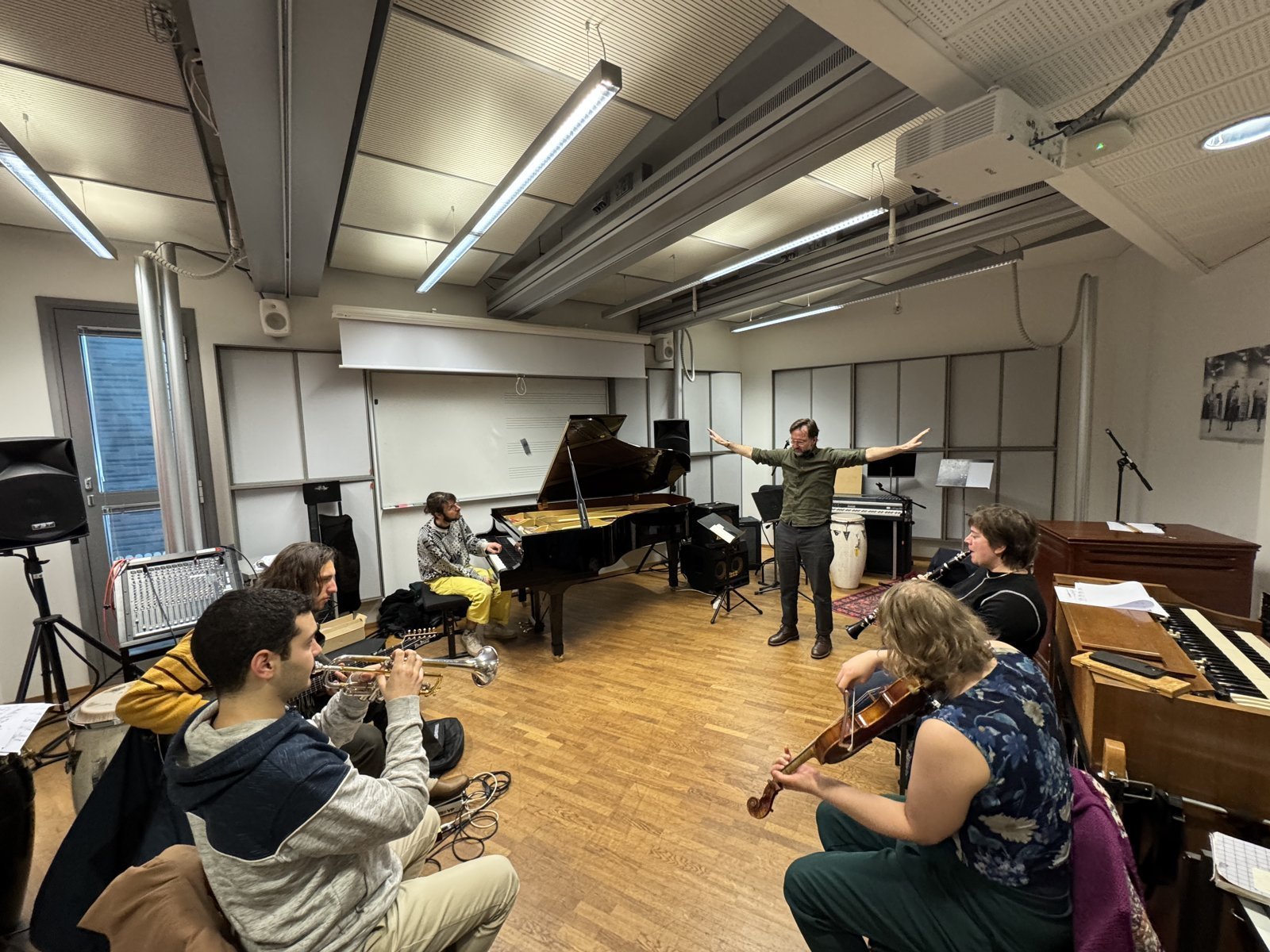
Diego Kohn moderating the group around the piano
Moderating
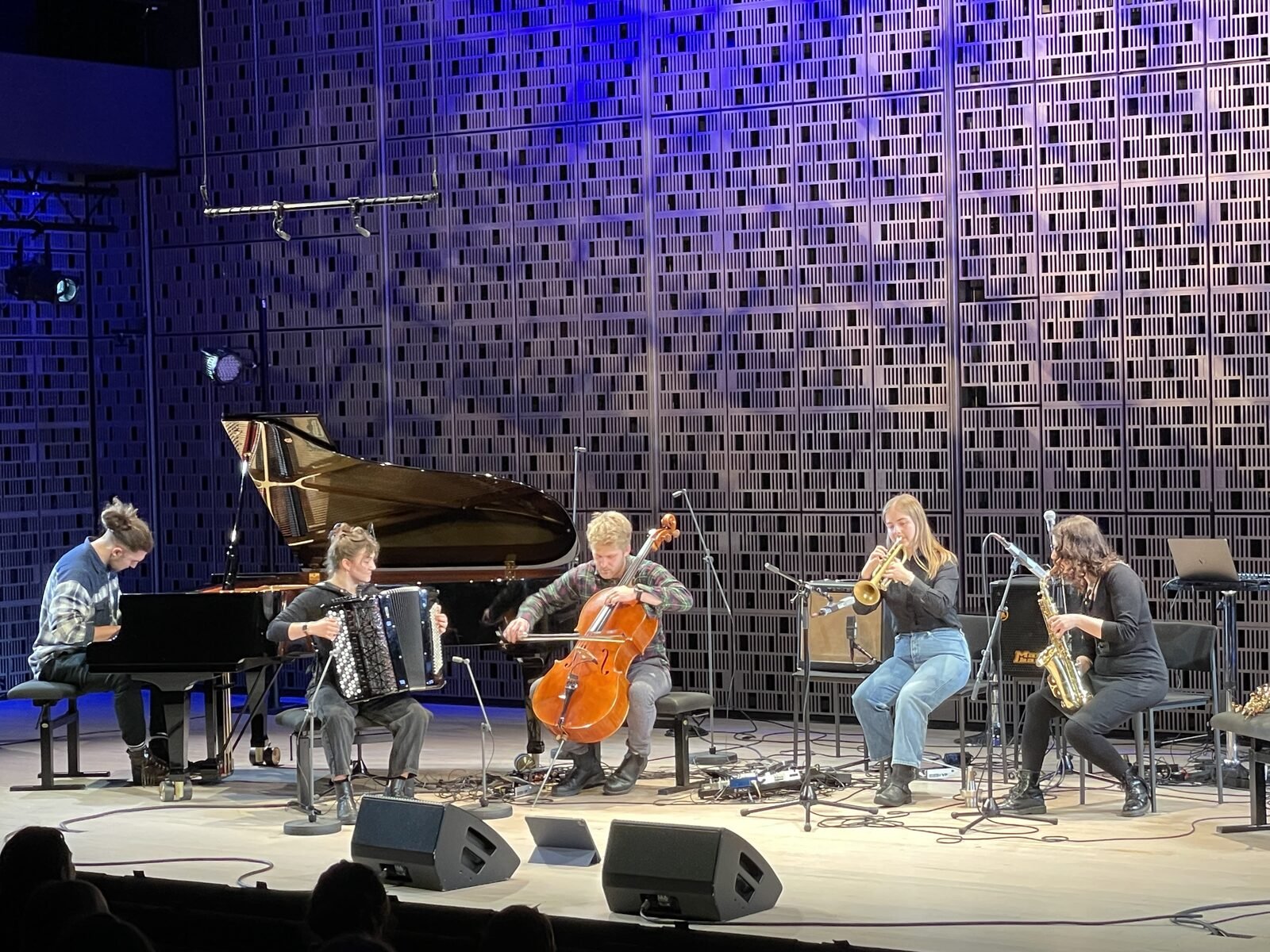
Students of the Intensive Programme in concert: piano, accordion, cello, trumpet and saxophone on a stage lit in blue
Student concert of the Intensive Programme
Diego Kohn with the workshop participants
The group

20242 entries

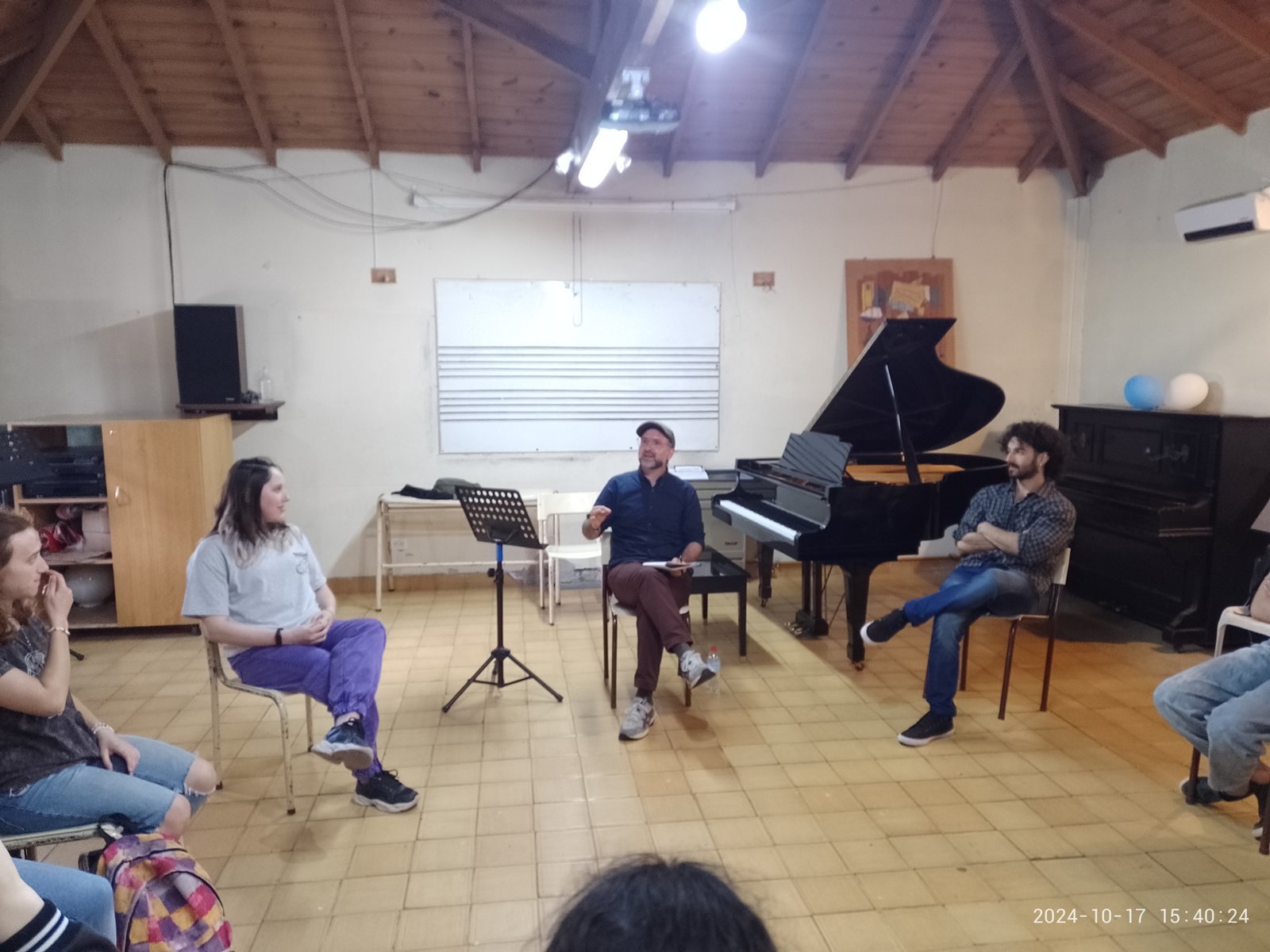
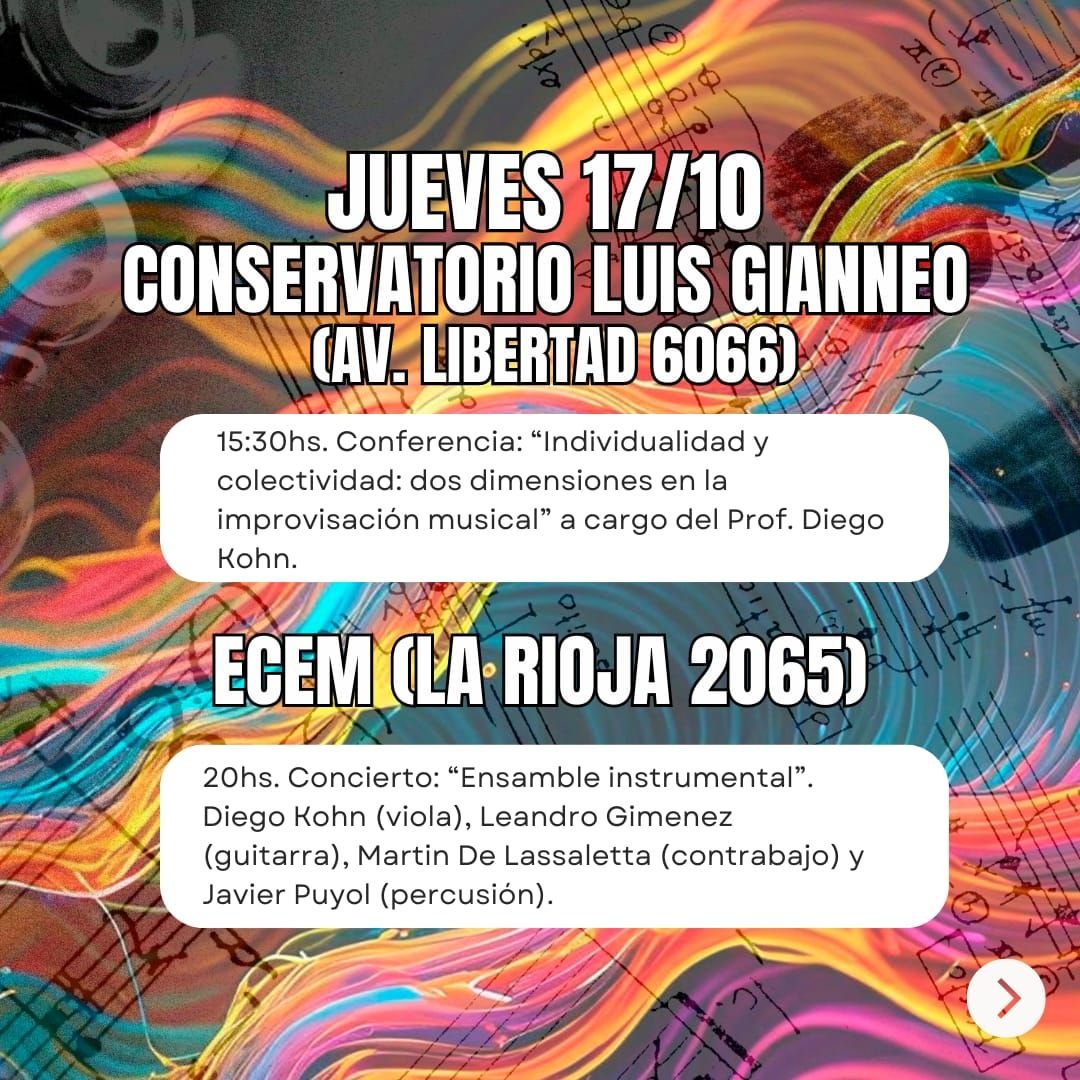
A workshop with conservatory students on personal musical identity and collective creation, followed the same evening by an improvised concert with musicians from Mar del Plata.

Workshop participants seated in a circle around the piano
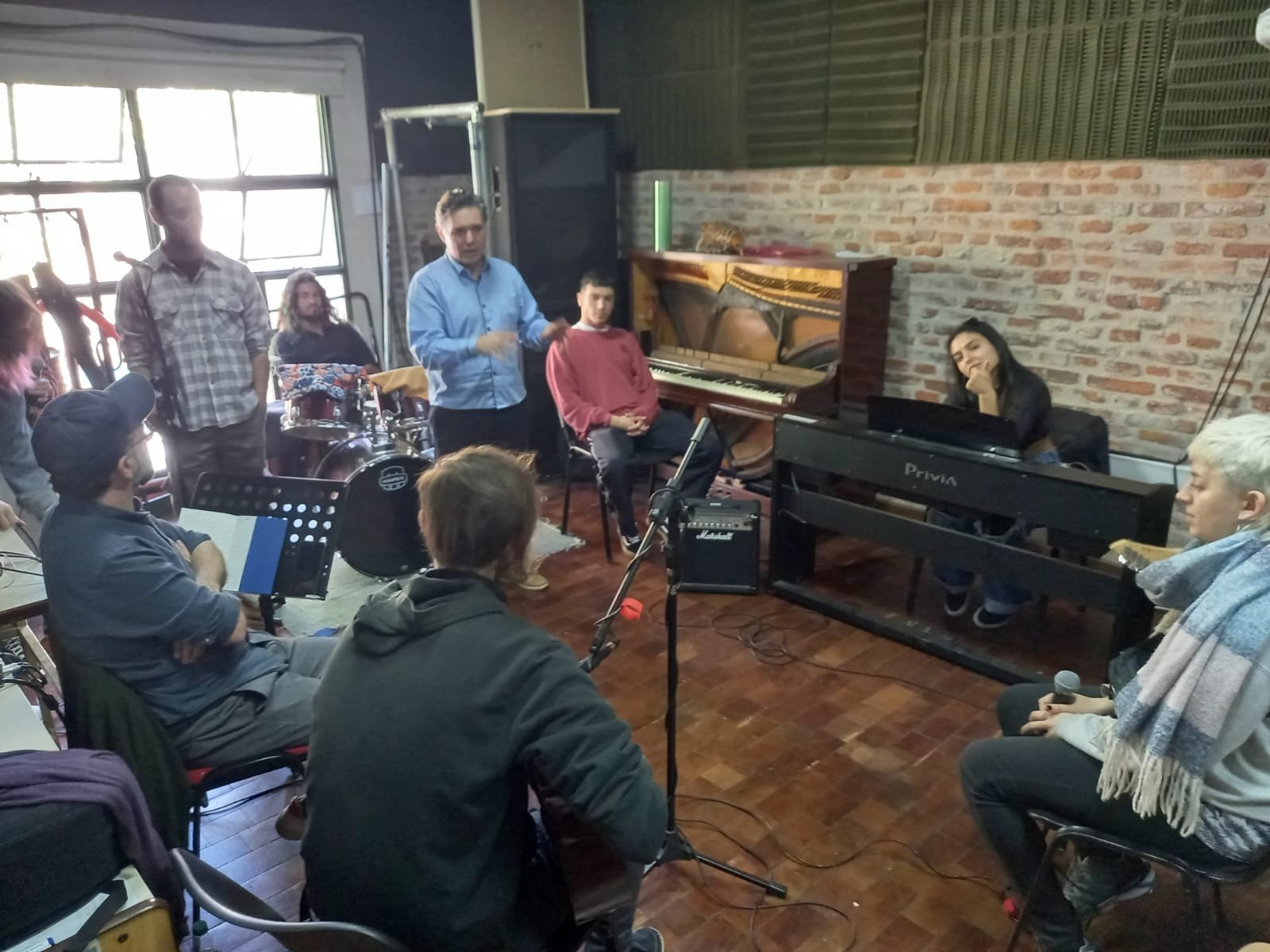
Mar del Plata, October 2024
Programme of 17 October 2024: workshop at Conservatorio Luis Gianneo and concert at ECEM
Programme, 17 October 2024
Participants playing during the workshop
In the workshop
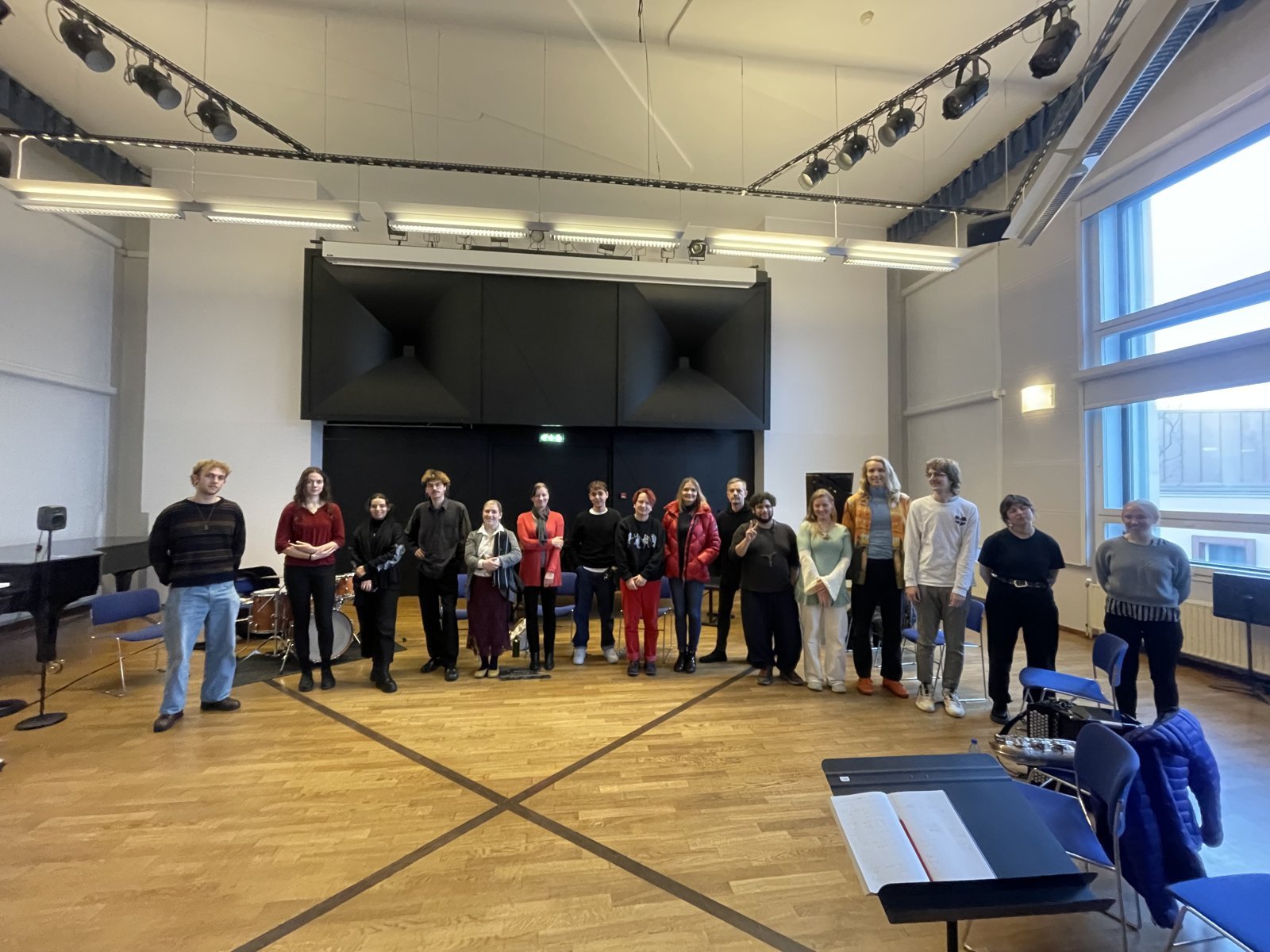
Group photo of the participants
The group

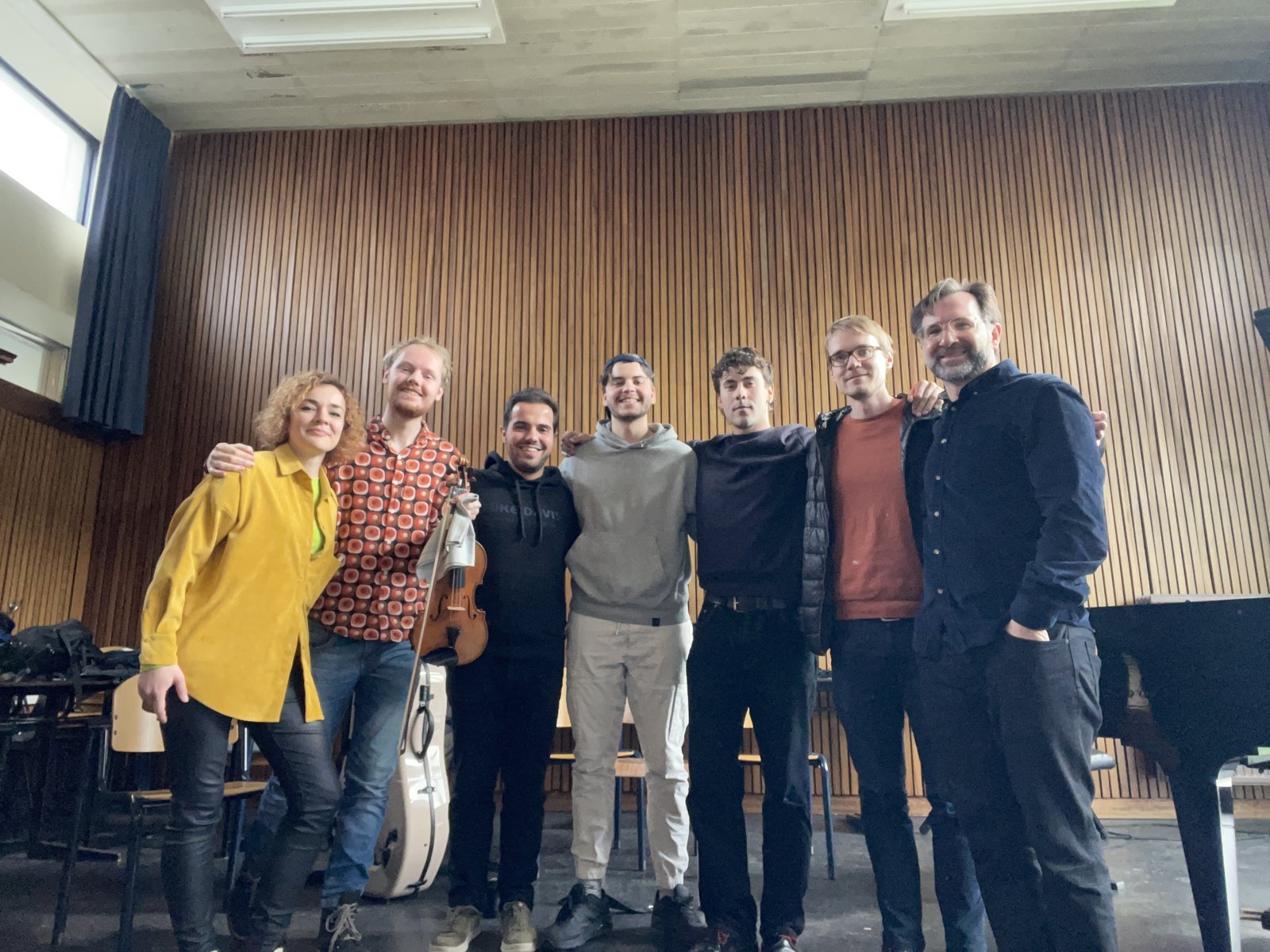
Five sessions with five international groups of students at the METRIC Intensive Programme 2024, hosted by the Royal Conservatoire Antwerp. Each group brought together students from different European conservatoires. The workshop explored how a personal musical voice and a shared sound can nourish each other: what shapes one's musical identity, how a group can make room for difference, and how to balance personal expression and collaboration. It was the first Intensive Programme of Zurich University of the Arts as a full member of the METRIC network, with Diego Kohn as its teacher and Steering Group representative.

Workshop participants and Diego Kohn standing together after a session
After a session
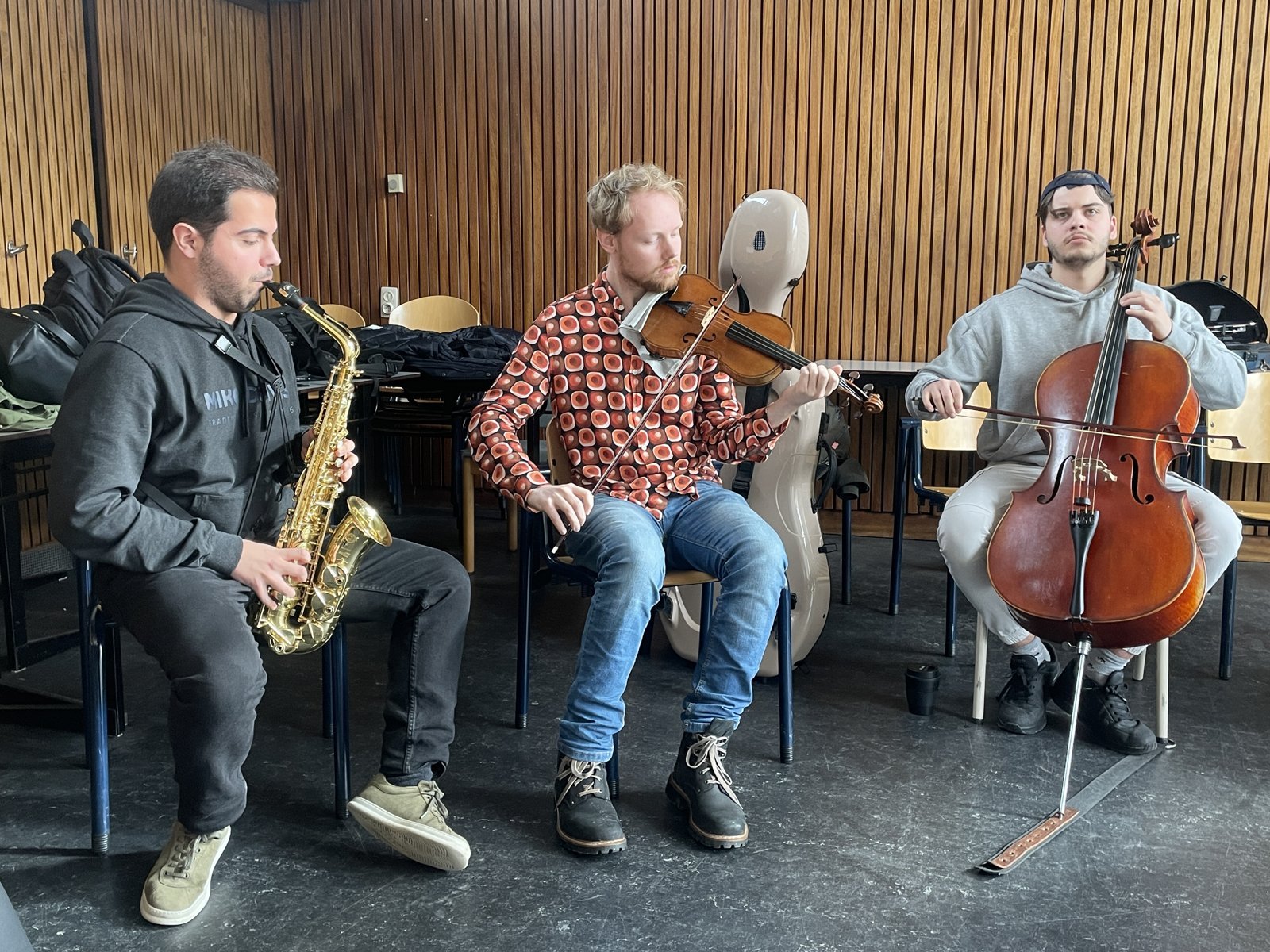
Trio of saxophone, violin and cello improvising
Trio improvisation
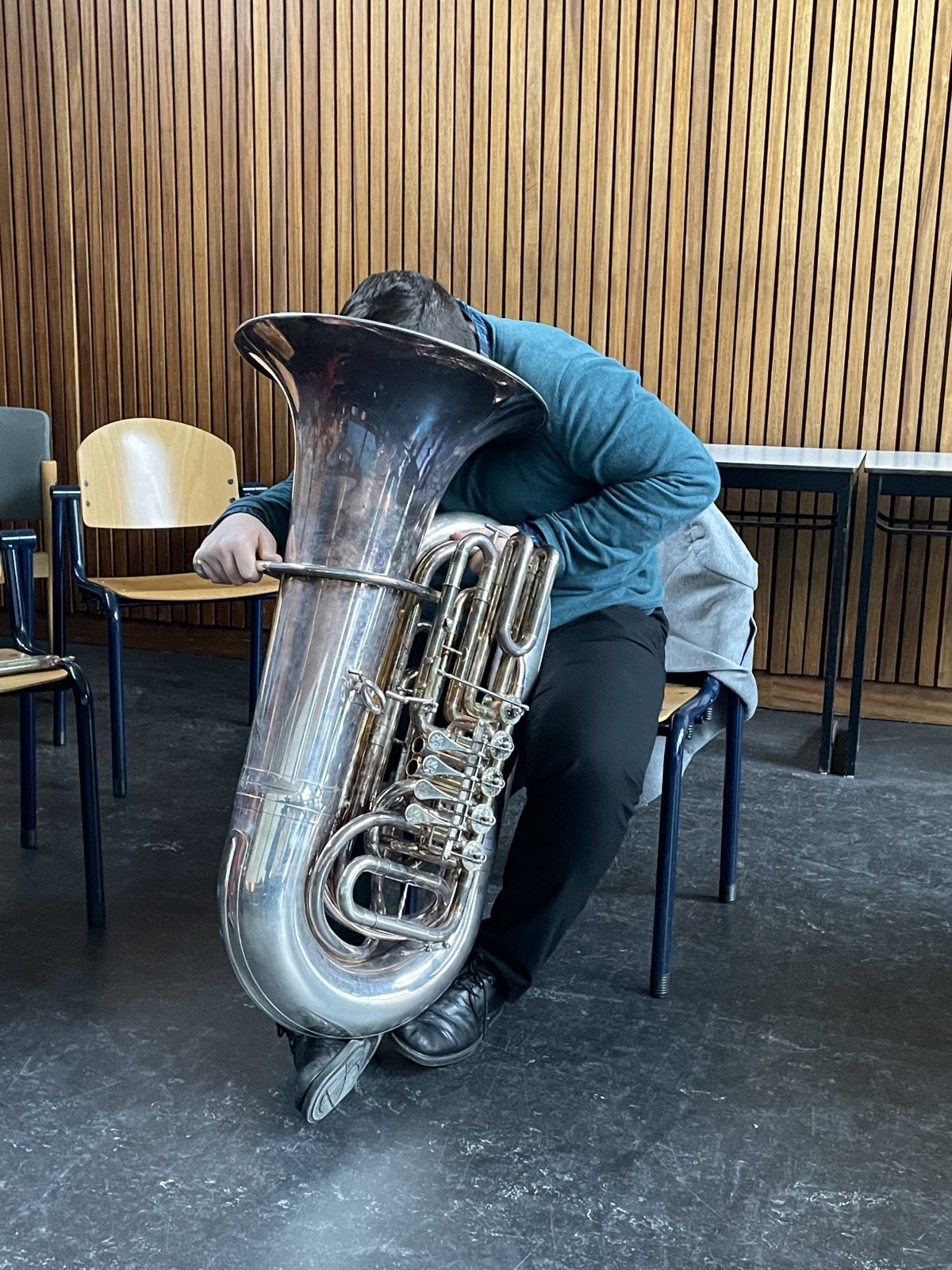
A tuba player exploring sounds with the bell close to the floor
Sound exploration
Trio of cello, saxophone and clarinet improvising
Cello, saxophone and clarinet

20238 entries

Three days of masterclasses with students and teachers of the Master’s programme in improvisation at the Estonian Academy of Music and Theatre, each day with its own focus: improvising in changing constellations, from solos to tutti; orientation and interaction within the group; and perception, with silence, space and the unintended. The closing concert, curated with Anto Pett, presented the work of the masterclasses in duos, trios, vocal groups and a large ensemble. Two weeks later, Anto Pett taught at Zurich University of the Arts.

Closing concert, 10 November 2023: playlist of 9 performances on YouTube

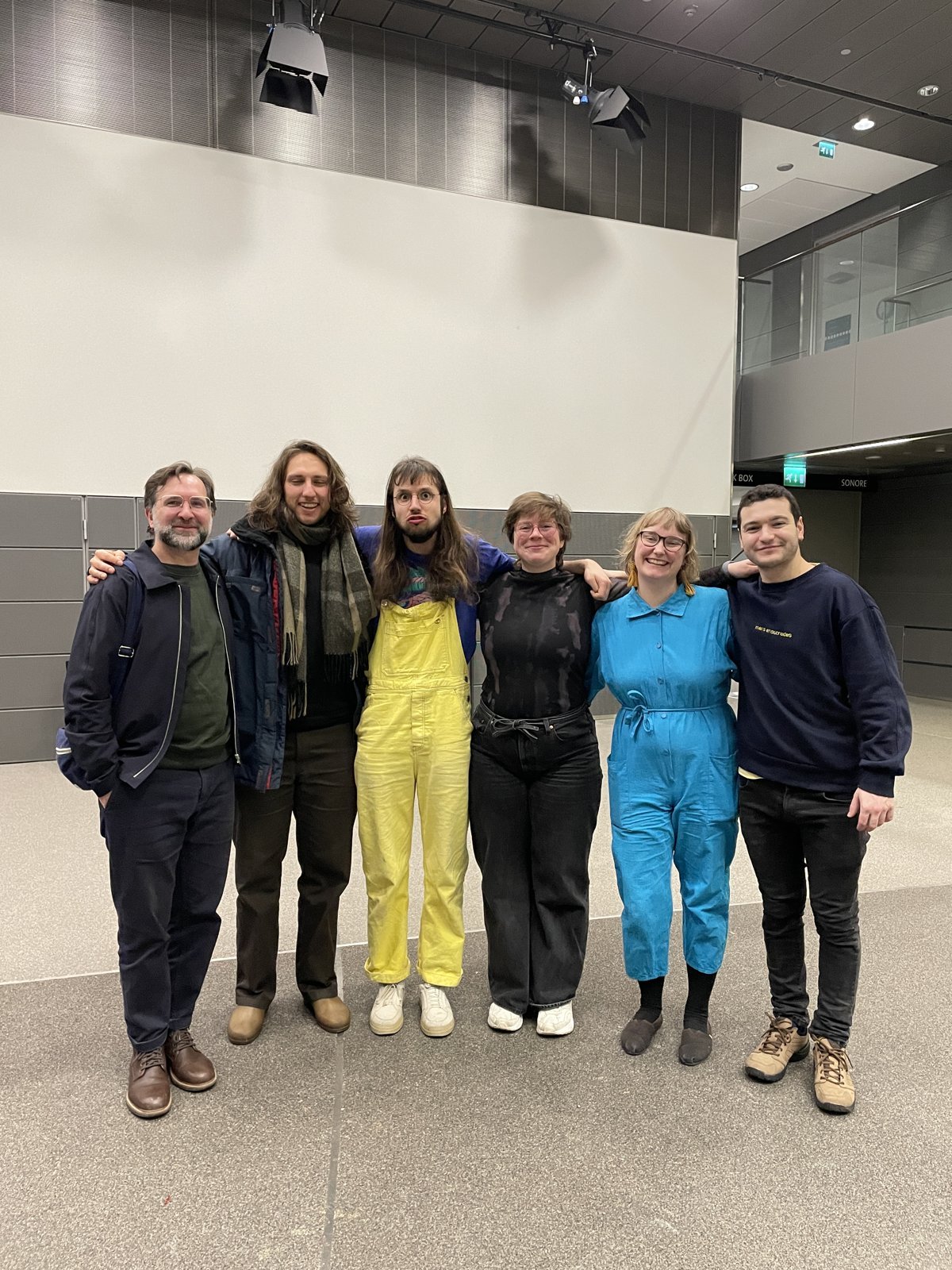
Participants of the masterclasses standing in a line in the hall
The participants
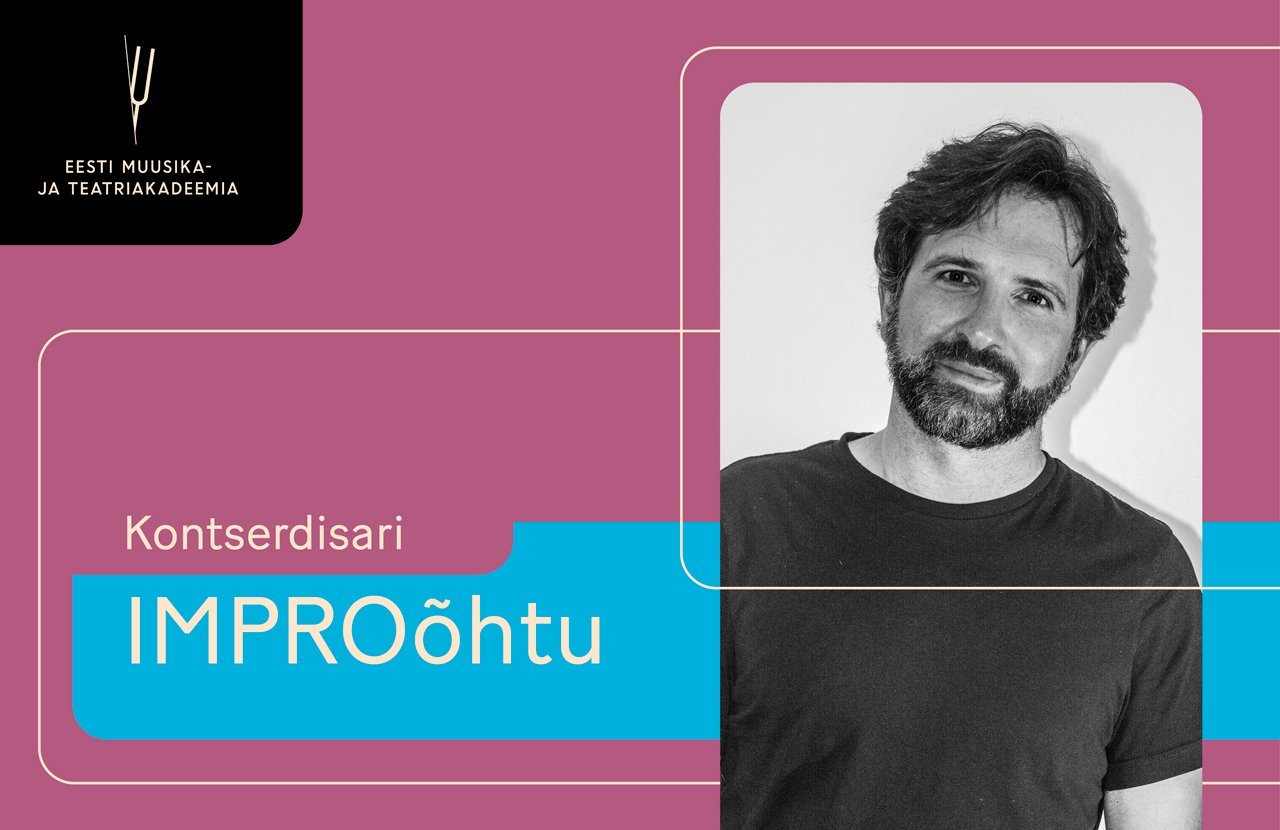
Concert poster of the Estonian Academy of Music and Theatre: Kontserdisari IMPROõhtu, with a portrait of Diego Kohn
IMPROõhtu, concert series of the Academy
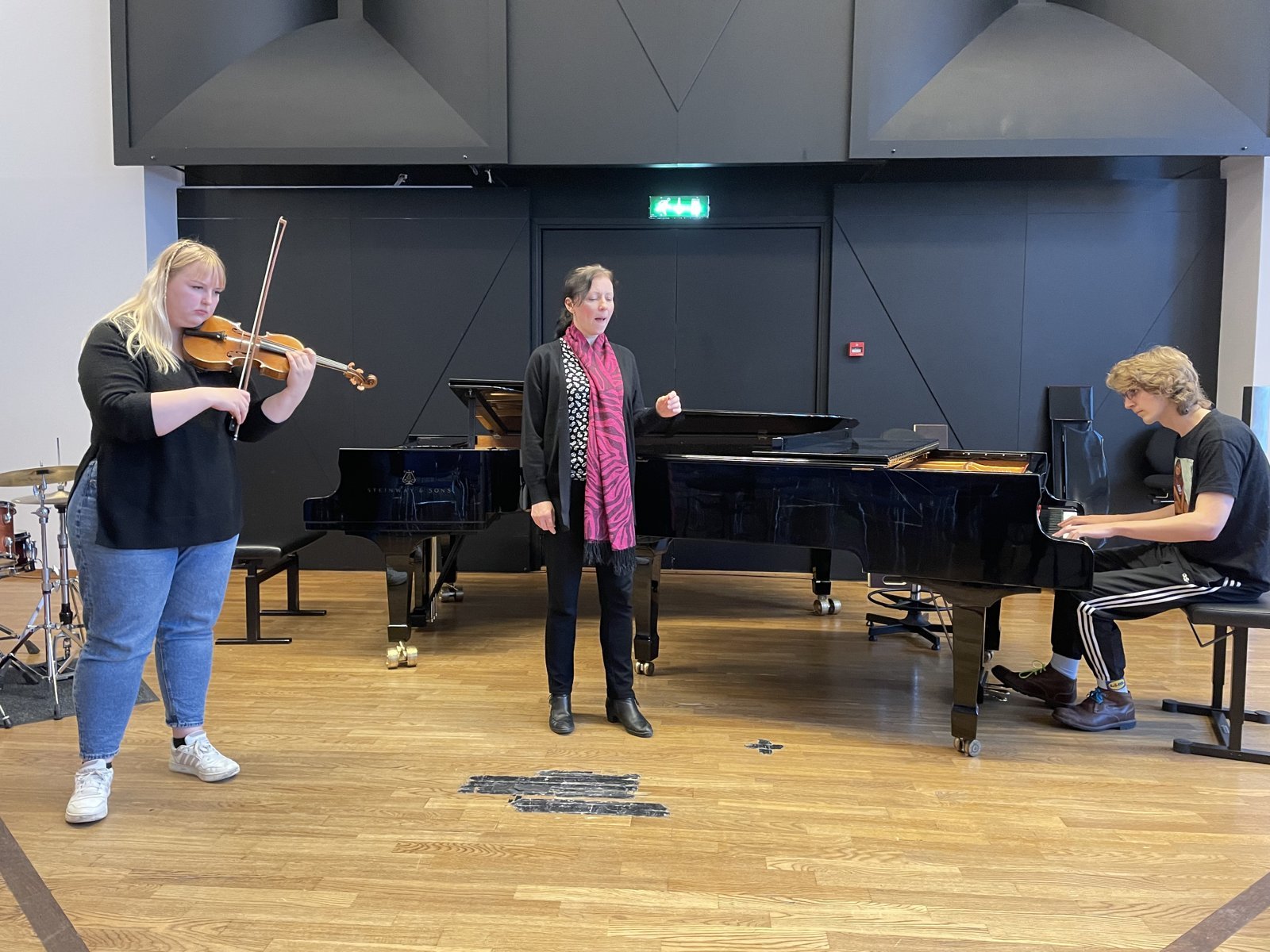
Violin, voice and piano improvising together
Playing together
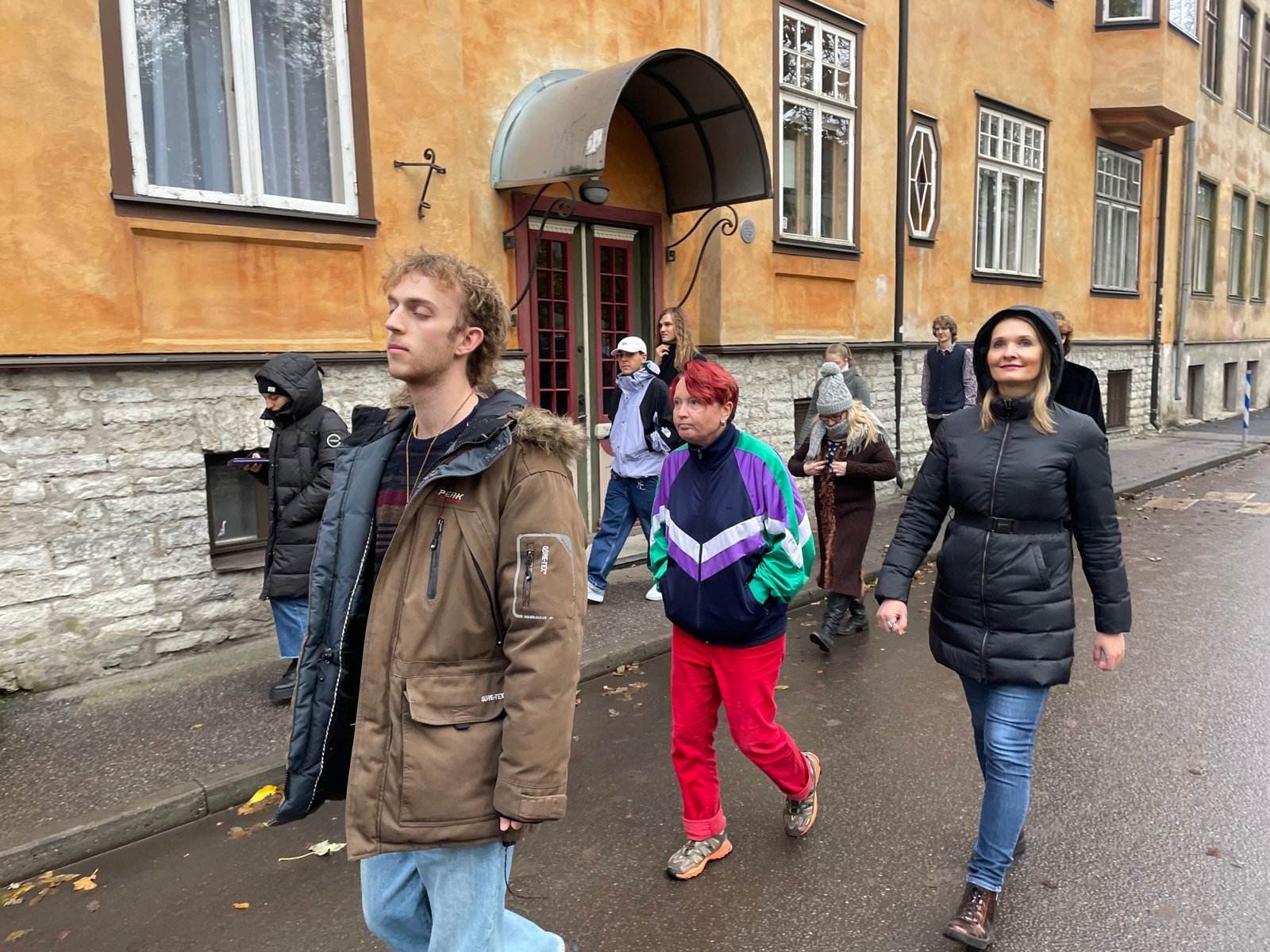
Participants on a soundwalk through the streets of Tallinn
Soundwalk

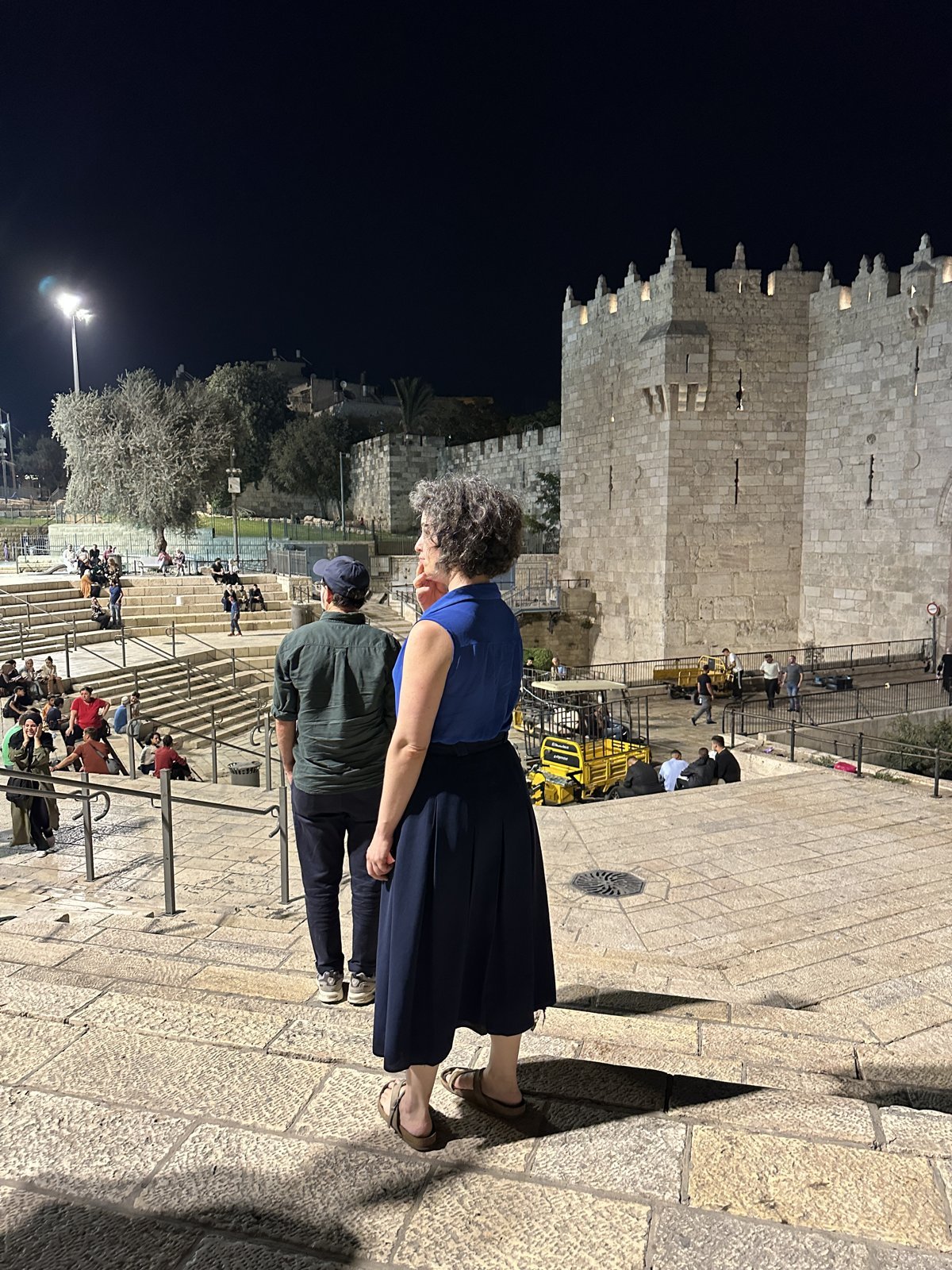
An evening workshop in the studio with musicians of the SEDEK collective, followed by a soundwalk at night through the streets near the Old City and a return to the studio to play.

Participants listening during a night soundwalk in Jerusalem
Soundwalk at night
Musicians improvising in the studio
In the studio
Diego Kohn standing with the group in the studio
Moderating
Diego Kohn at the Musrara School of Art
Musrara, Jerusalem

A four-hour workshop with music students, the last stop of a tour through five Argentine universities.

Flyer: El arte de la escucha. Improvisación y composición colectiva, a cargo de Diego Kohn, 17 May 2023, UNA Artes Musicales y Sonoras
Flyer, 17 May 2023
Workshop participants in a circle
Buenos Aires, May 2023
Diego Kohn moderating the group
Moderating
Violin, cello and guitar trio improvising
Trio

A workshop on improvisation and collective creation with composition students working with electroacoustic media.

Students improvising during the workshop
Quilmes, May 2023
Group photo of the participants
The group
Participants playing together with instruments and electronics
Ensemble
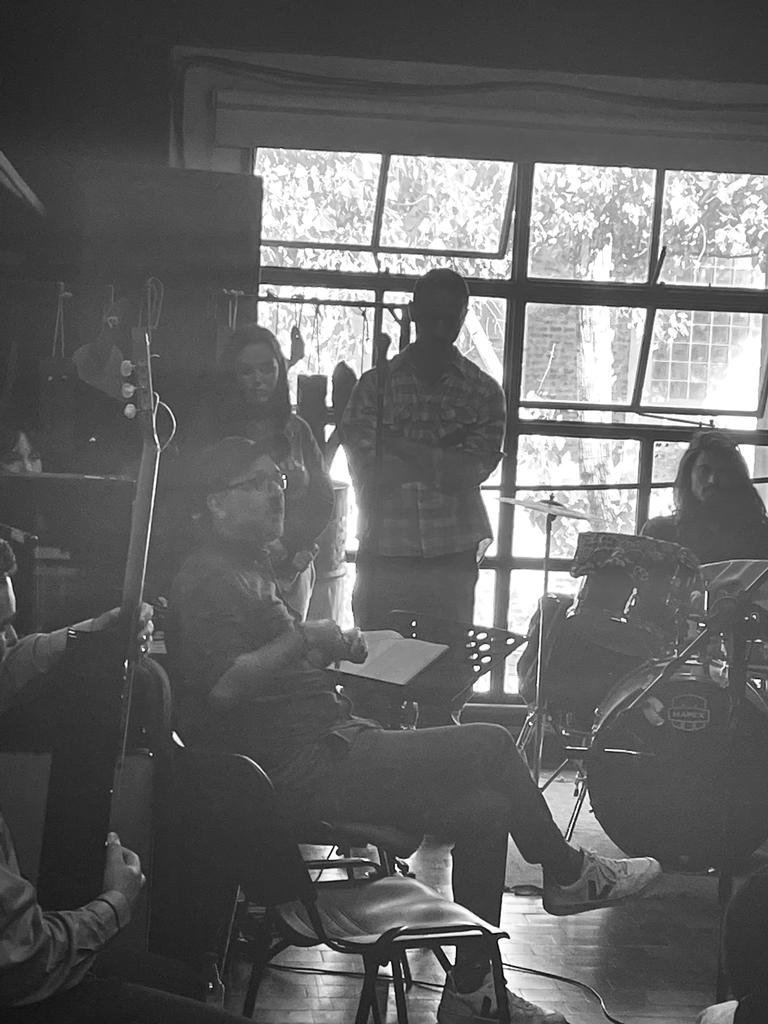
Musicians playing against the light of a window, black and white
Against the light

A workshop with around thirty participants playing acoustic instruments, voice and electronics, including a soundwalk around the campus.

A large circle of participants with instruments and electronics
San Martín, May 2023
Group photo of the participants
The group
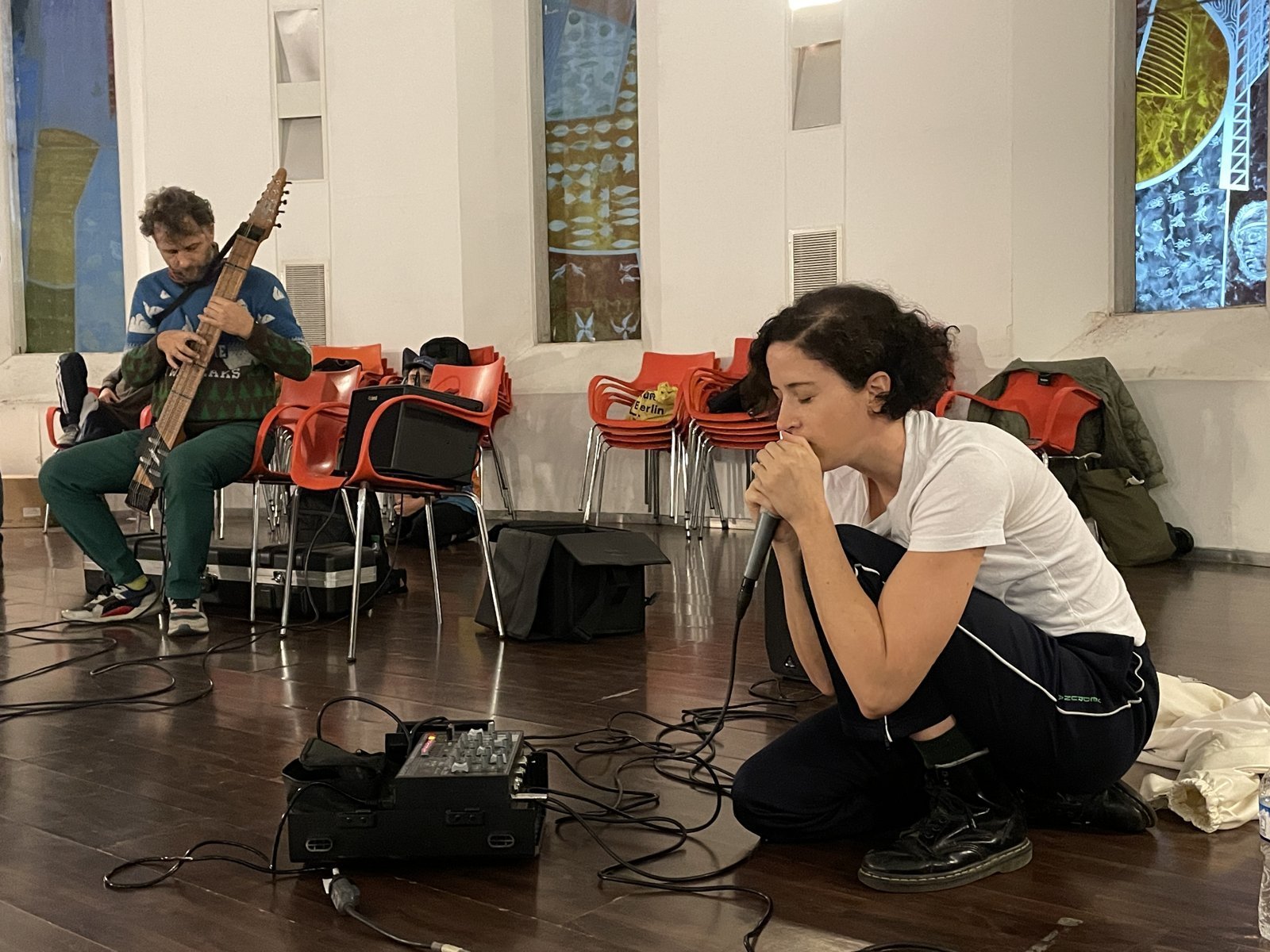
A participant performing in the circular hall
Performance
Voice and electric guitar improvising
Voice and guitar

Four hours of improvisation in an intimate, house-like space, closing with a concert by the participants.

Musicians improvising in a living room
Rosario, May 2023
Group photo of the participants
The group
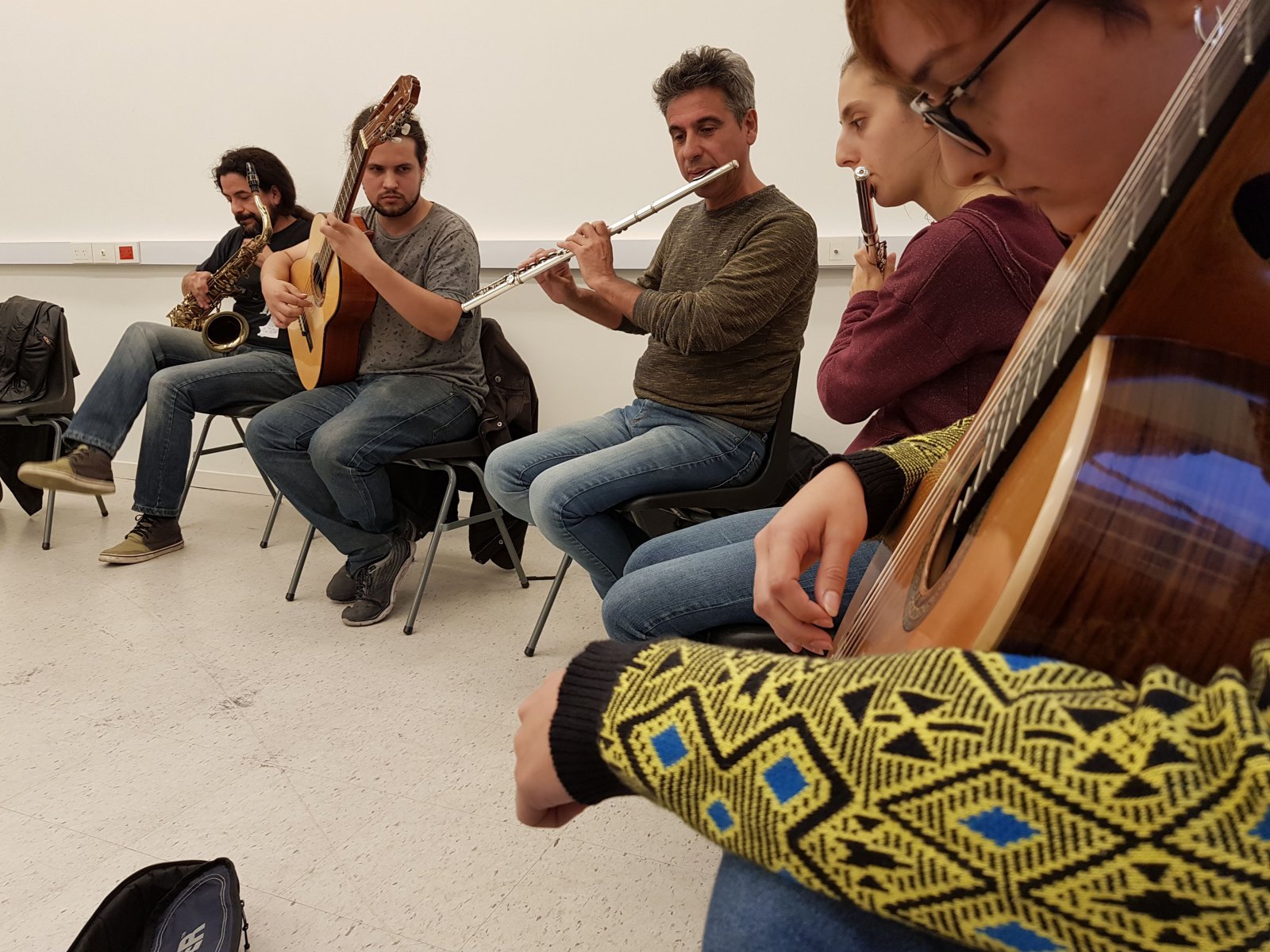
Guitar and flute duo
Guitar and flute
Conversation after playing
Conversation

Two days with twelve participants selected from more than fifty applicants, at the Laboratory of Electroacoustics and Computer Music, closing with a concert at the Pabellón México. The visit also led to a concert in the Living/Leaving series and to a new local ensemble of improvisers.

«Los improvisadores habitan un tiempo/espacio en el que deben regular de manera colectiva el proceso.»

“Improvisers inhabit a time and space in which they must collectively regulate the process.”Franco Pellini, National University of Córdoba, visit report

Documentation video to be added

Workshop participants with their instruments
Córdoba, May 2023
The group in a circle on a black stage, seen from above
Circle on stage
Participants on a soundwalk across the campus
Soundwalk
Diego Kohn writing im·pro·visus on the whiteboard
im·pro·visus

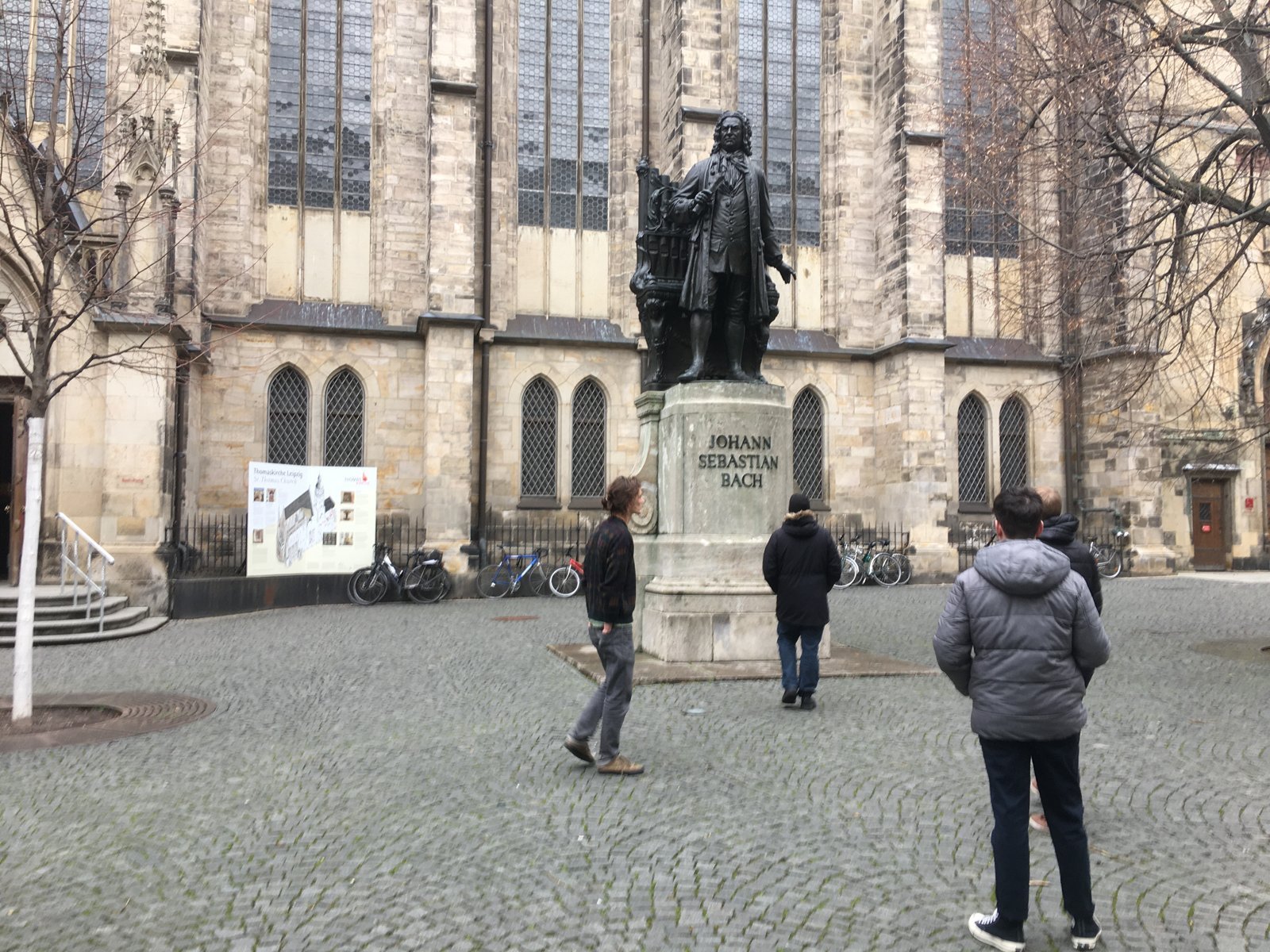
Diego Kohn’s first Intensive Programme of the METRIC network, as faculty observer for Zurich University of the Arts. The organisers invited him to lead two workshops with groups of six advanced students from different European conservatoires, and the students asked for a third session: a silent soundwalk through the corridors, the streets, the university library, the Thomaskirche and the Johannapark, followed by a conversation on the unintended poetry of sounds and a group improvisation. After this visit, Zurich University of the Arts joined the network.

Links

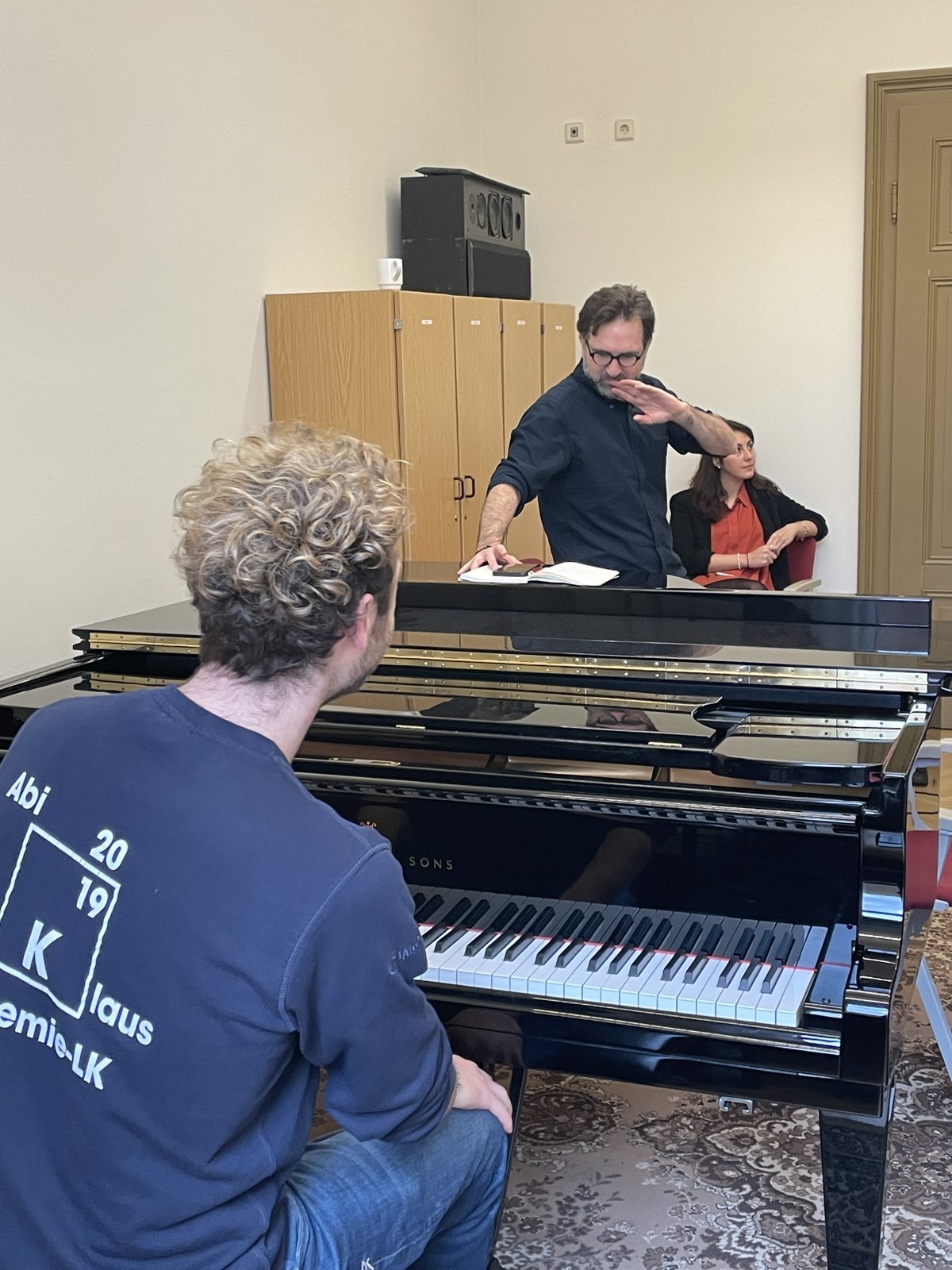
Diego Kohn at the piano, working with a student during the workshop
In the workshop
Electric guitar, accordion and double bass improvising as a trio in the classroom
Constellations: a trio
Diego Kohn on viola in a duo with a violinist at an evening concert
Evening concert, Diego Kohn (viola) in a duo
Participants of the silent soundwalk in front of the Thomaskirche and the Bach monument
Silent soundwalk, Thomaskirche

20222 entries

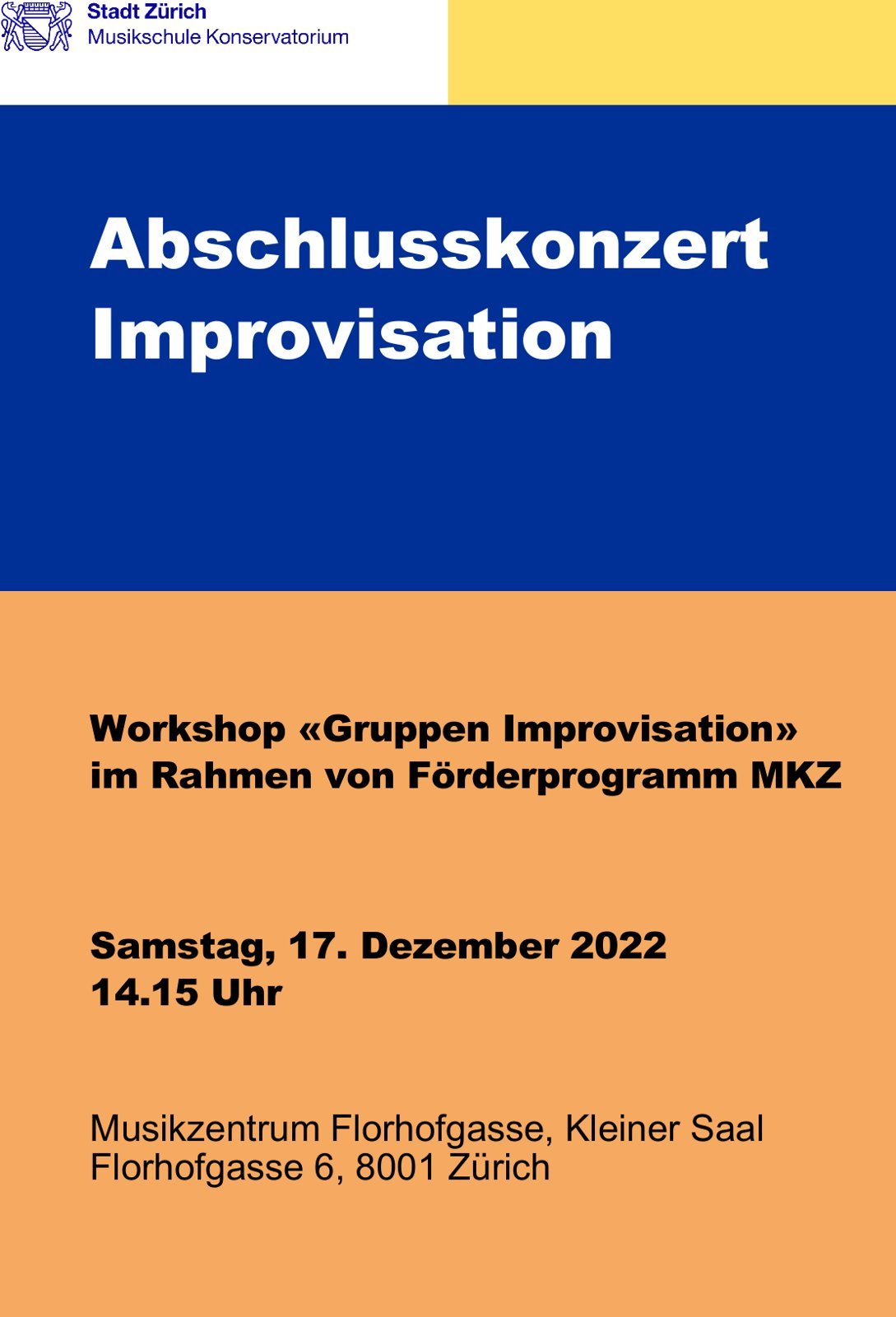
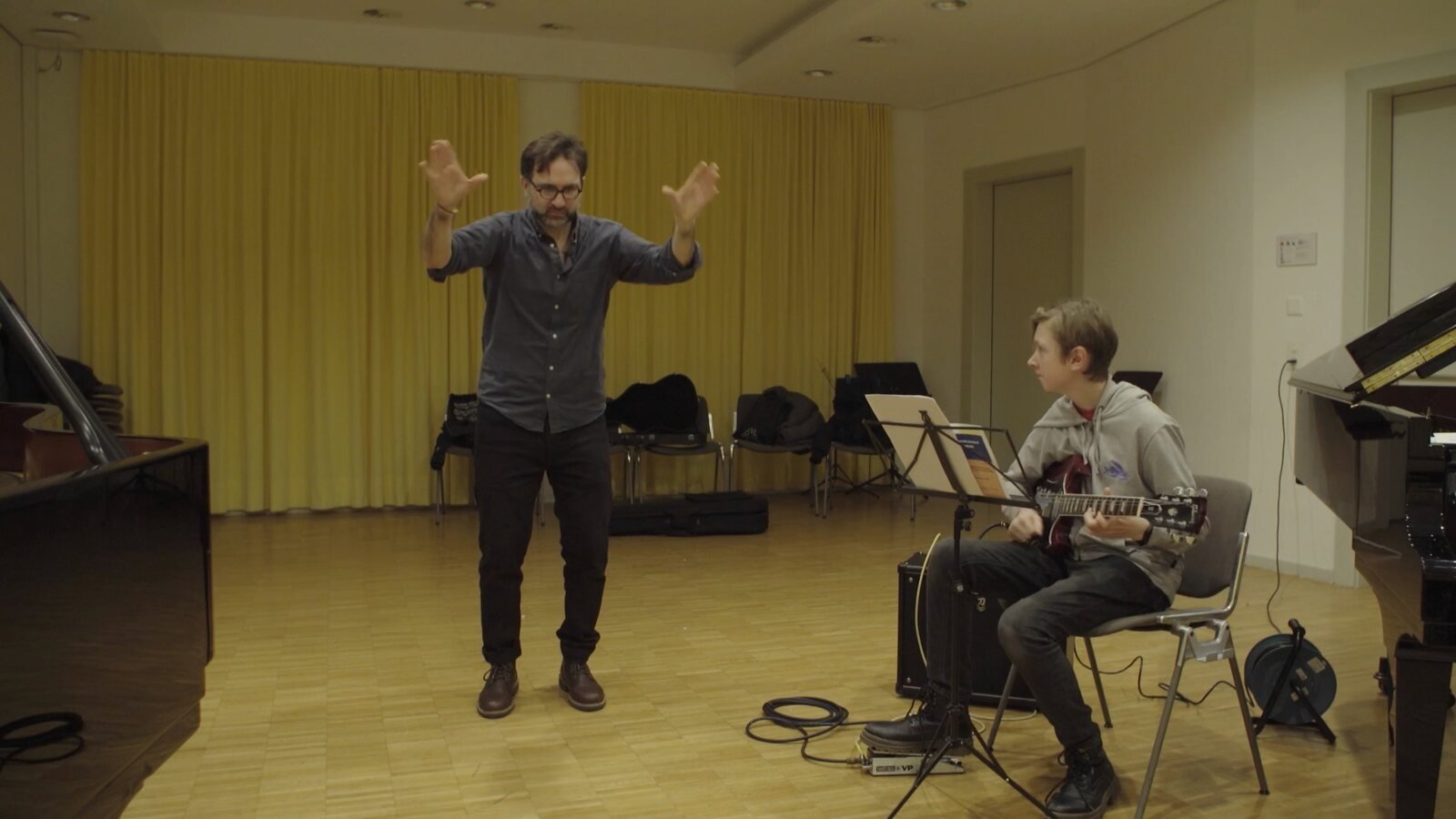
Four Saturdays of group improvisation with young musicians aged 11 and over, from signs and new sounds to grooves and loops, ending in a concert.

Video: Felix Hergert

Programme of the closing concert of the workshop Gruppen Improvisation, Musikschule Konservatorium Zürich, 17 December 2022
Closing concert programme, 17 December 2022
Diego Kohn shaping the music with both hands raised while a young guitarist plays
Shaping the music with signs. Photo: Felix Hergert
Two young pianists at the grand piano, Diego Kohn guiding them with a gesture in the background
Four hands at the piano, guided by signs. Photo: Felix Hergert
Diego Kohn and the young musicians bowing after the closing concert
After the closing concert

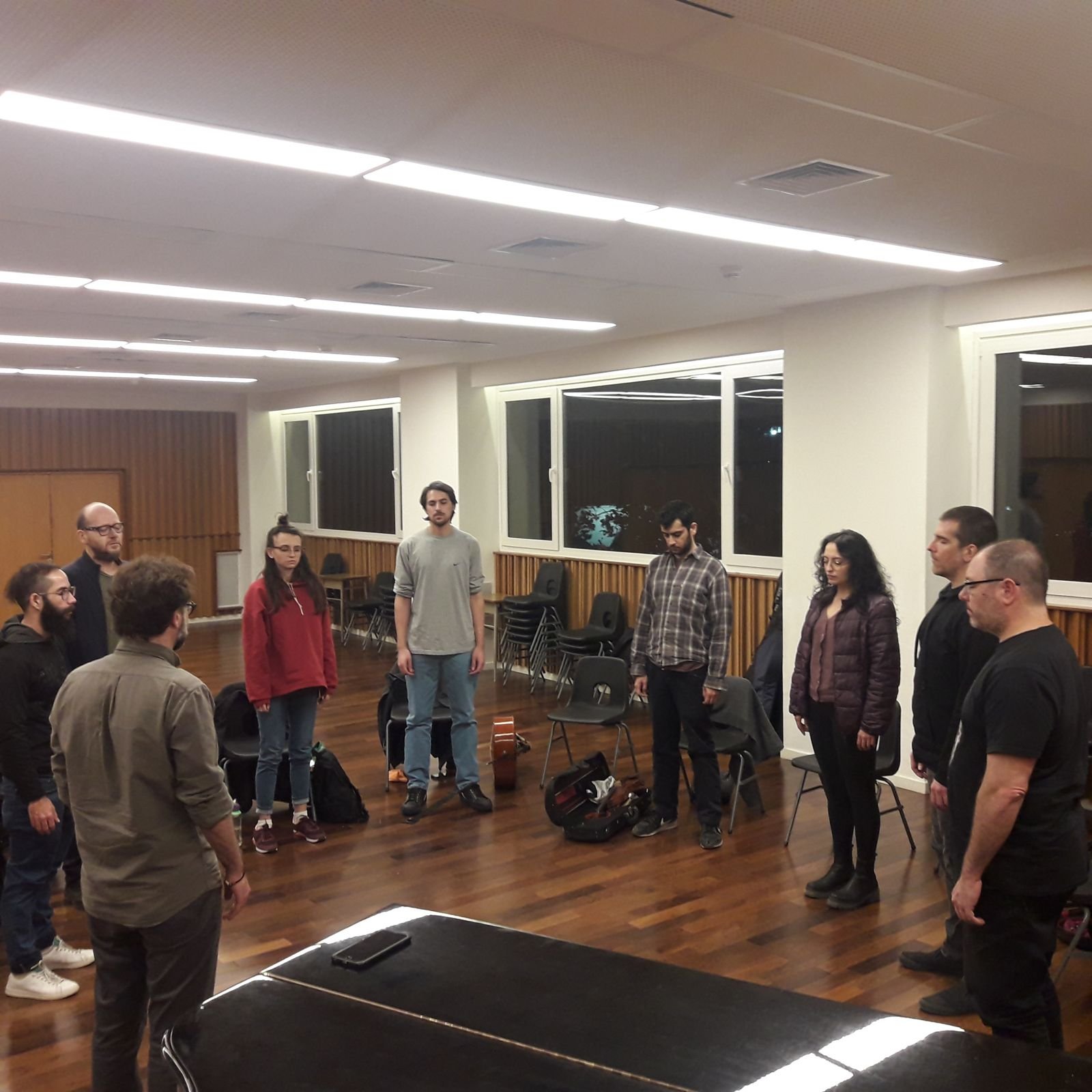
Two sessions with students of the Mixed Media Composition programme: contemporary improvisation, listening exercises and real-time composition with signs.

Links

Participants seated in a circle
Buenos Aires, April 2022
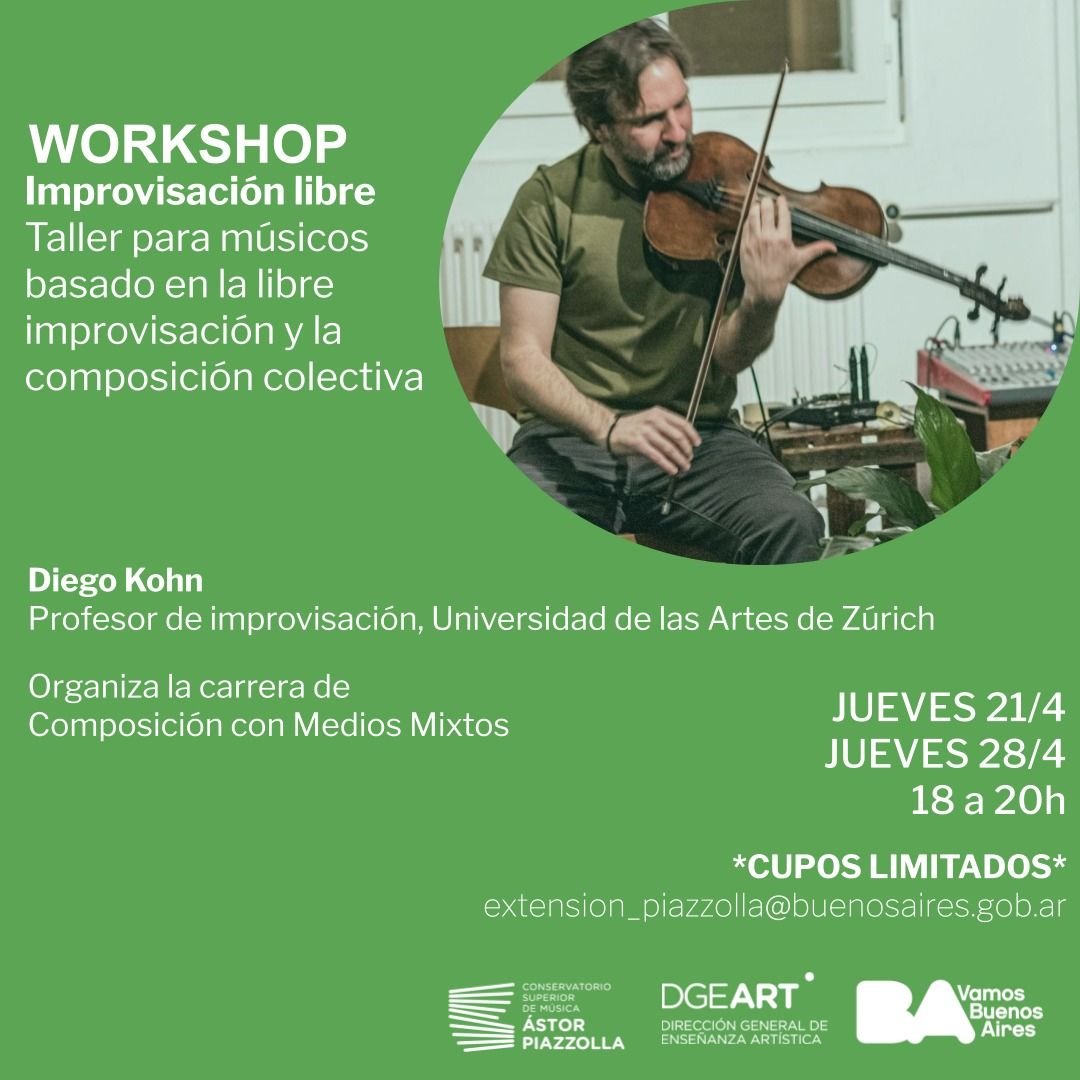
Workshop flyer, Conservatorio Astor Piazzolla, April 2022
Flyer
Diego Kohn conducting the group with hand signs
Composing with signs
Warm-up exercise with the group
Warm-up

20211 entry

The European Intuitive Music Conference has brought improvising musicians together since 1995. Its 2021 edition in Basel focused on conducted improvisation: I was invited to lead a conduction workshop with half of the participants, while Etienne Rolin worked with the other half on Soundpainting. After forty minutes, both groups and both conductors met and played together.

“I learnt something from Diego’s aesthetic, and you can use this aesthetic later in your own freedom.”

Hans Tonino, flautist and co-organiser of the conference, in the discussion after the workshops

About the workshop

I chose a few signs and mostly indicated only when to start and when to stop: the sound itself came from the group. The approach drew on Butch Morris’s Conduction and on the signs I use in Compovisation, reduced to a minimum so that listening, pauses and low, quiet sounds could lead the music.

In the discussion that followed, participants compared the two approaches. Etienne Rolin’s group sounded louder and more explosive, mine more controlled and attentive to silence. For several of them, the sign system mattered less than the intention of the conductor and the listening of the group. Thomas Zimmermann, who played in my group, put it this way: “we had the most possible freedom of everyone, and that was very impressive for me.” The organisers published a transcript of the discussion.

During the same weekend I also led a session of Pauline Oliveros’s Sonic Meditation VIII and played in the opening concert and in free formations, in small groups formed at random.

The workshop: forty minutes with half of the participants. Video: Franz Bannwart

Tutti: both groups with both conductors, Diego Kohn and Etienne Rolin. Video: Franz Bannwart

Diego Kohn, seated, conducting the group with both hands while Etienne Rolin stands beside him and the participants sit in a circle
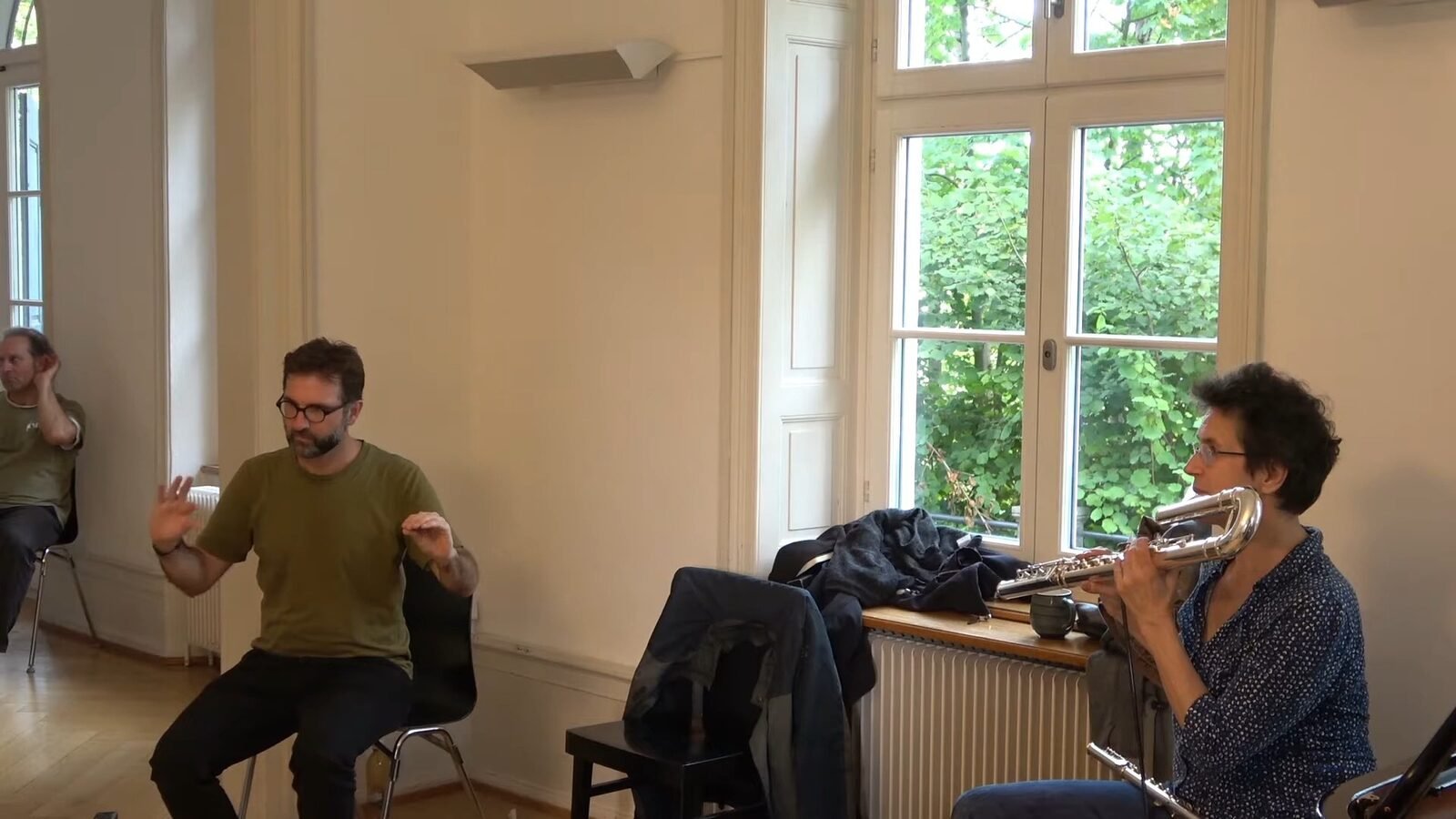
Conducting the group, Etienne Rolin beside me. Video still: Franz Bannwart
Diego Kohn giving a sign with open hands to a bass flute player
A few signs, much listening. Video still: Franz Bannwart
Both groups playing together, Etienne Rolin conducting standing and Diego Kohn conducting seated
Tutti with two conductors. Video still: Franz Bannwart
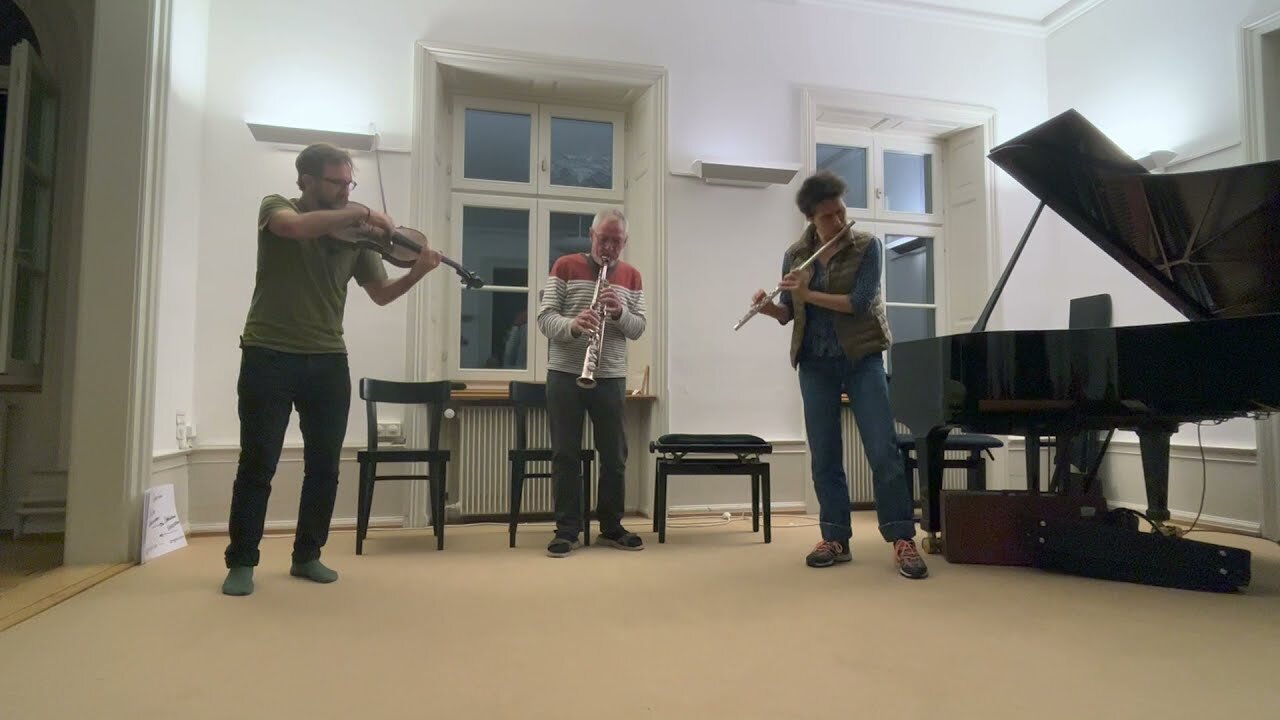
Diego Kohn on violin in a trio with a soprano saxophonist and a flautist, next to a grand piano
Trio with Guus Derkzen and Angelika Sheridan. Video still: Hans Tonino

Playing at the conference

Trio with Guus Derkzen (soprano saxophone) and Angelika Sheridan (flute), 2 October · Watch on YouTube
Opening concert: with Max Stehle (saxophone), Cornelia Voss and Brigitte Küpper (voice) · Watch on YouTube
Opening concert: with Angelika Sheridan (flute) and Thomas Zimmermann (shakuhachi) · Watch on YouTube

20191 entry

A talk and workshop in two meetings on improvisation and collective composition, with around thirty students from different instruments and styles.

Workshop participants seated in a circle
Buenos Aires, April 2019
Flyer of the second meeting, 8 May 2019
Flyer, 8 May 2019
Exploring the inside of the piano
Inside the piano
Participants playing guitar, flute and other instruments together
Playing together

20182 entries

An afternoon for sound artists at Twenty Alpha, on the 13th floor of a building on Hennessy Road. The workshop moved between two places: the studio, where electronic devices and everyday objects became instruments, and the city below, which we walked through with closed eyes.

About the workshop

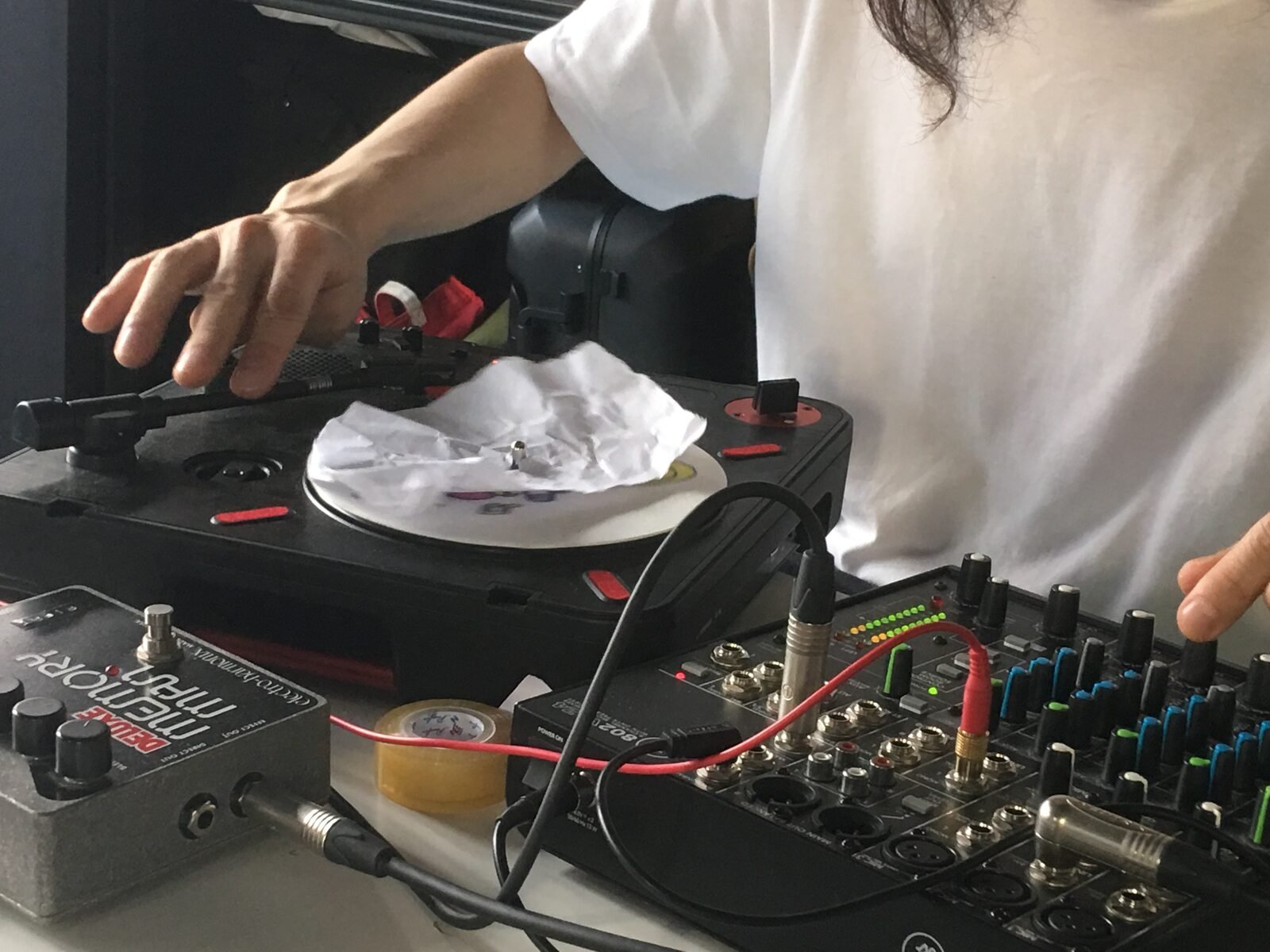
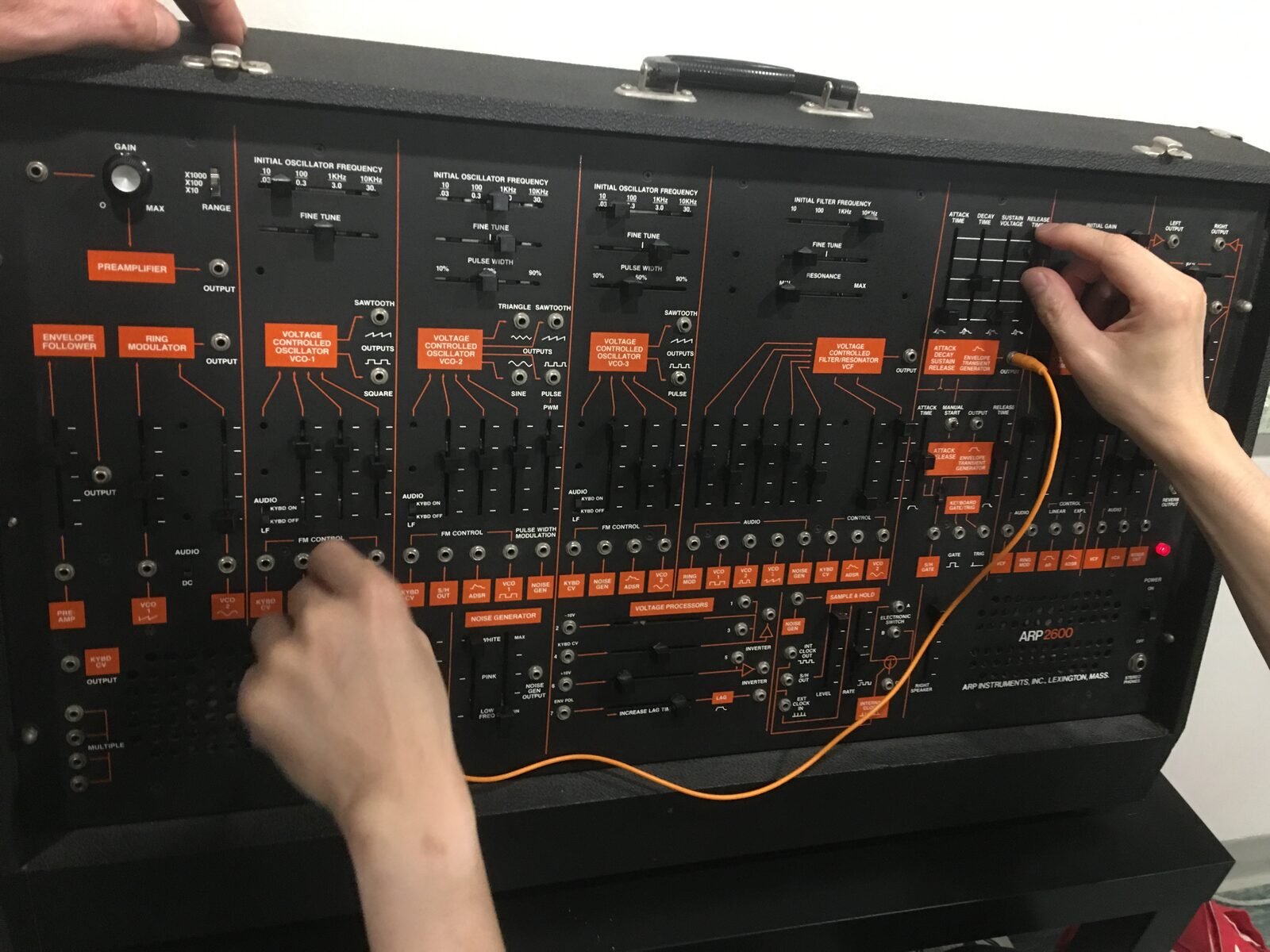
The starting point was listening: becoming aware of the sounds we make and of the sounds that surround us. In the studio, mixers, turntables, effect pedals and small electronic devices were played as instruments for improvisation. A sheet of crumpled paper on a turntable was enough to open a new field of sound, to be generated, taken apart and shared in the group.

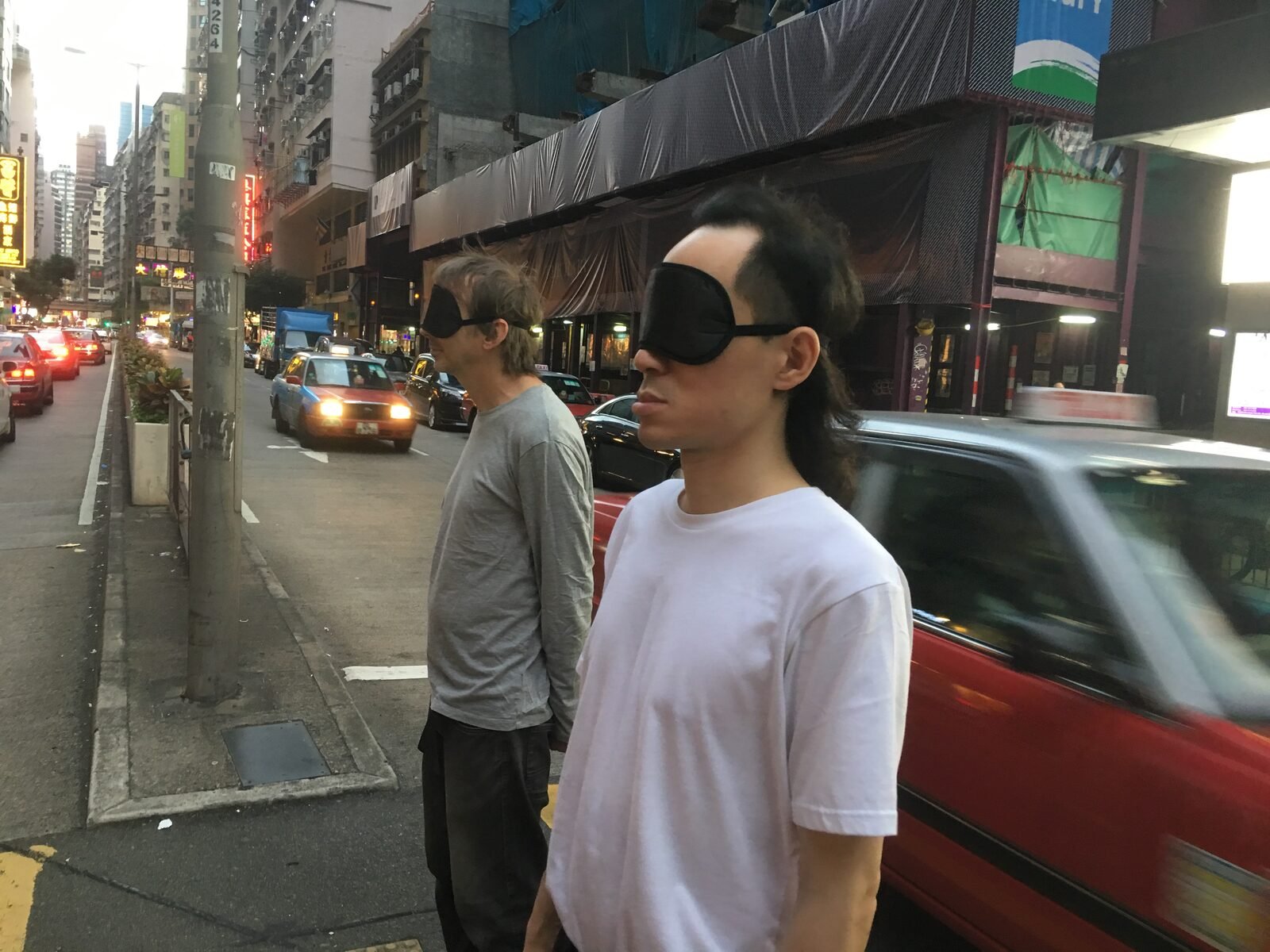
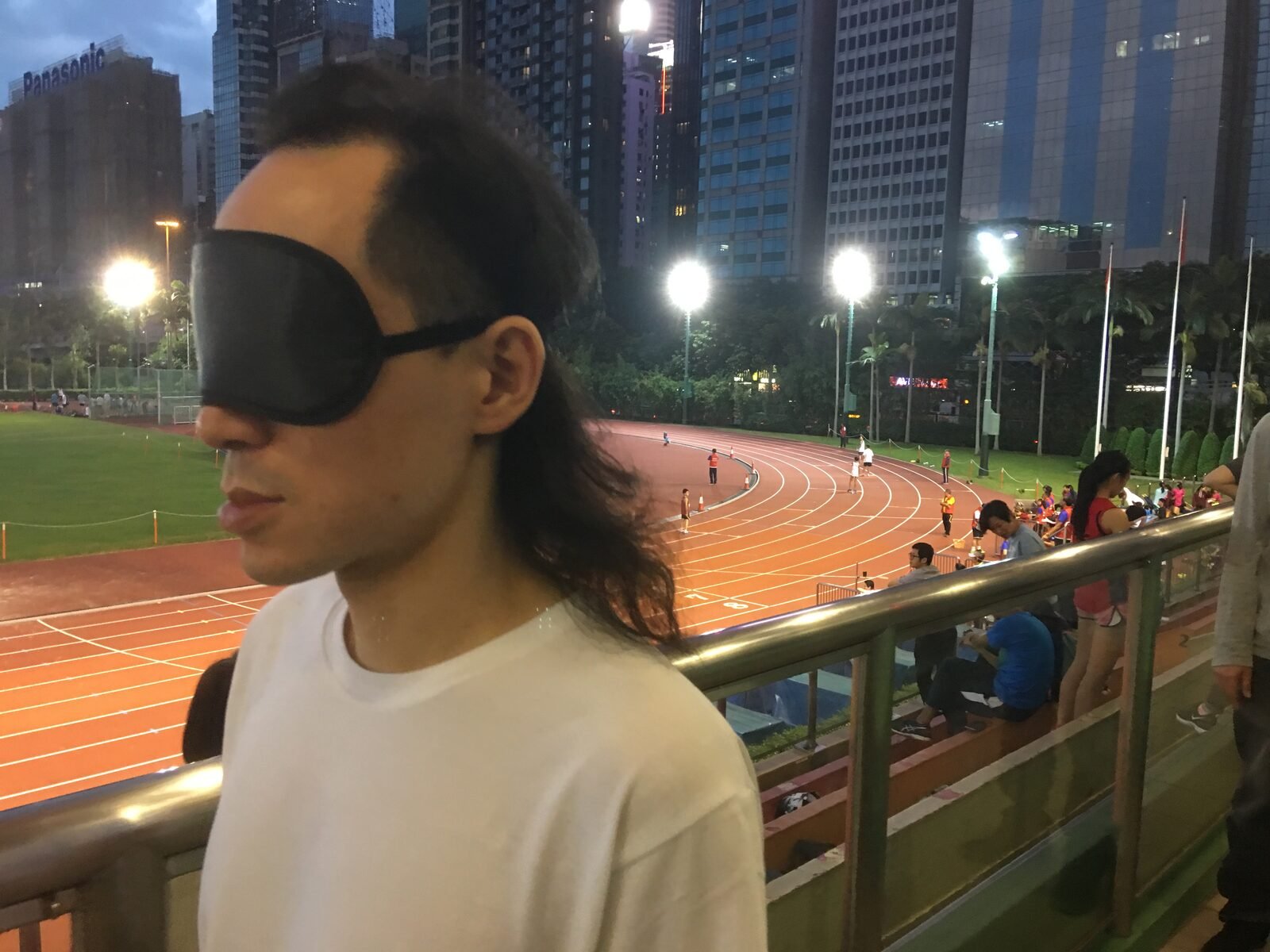
Then we went out. With eyes covered, the participants walked through Wan Chai at dusk: narrow passages, footbridges, a busy street corner, the stands of a sports ground. Without sight, the city turned into a dense composition that changed with every step, and listening to it became a way of taking part in it.

The six words on the flyer outlined the afternoon: collaboration, improvisation, listening, generating, deconstruction, performance.

Links

Workshop flyer in English and Chinese: 自由即興, Workshop for sound artists, 聲音藝術家的工作坊, Diego Kohn, Twenty Alpha, 18 November 2018
Flyer, in English and Chinese

Listening walk on a footbridge in Wan Chai (with sound)

A table with mixers, effect pedals, cables and small electronic devices in the studio
The studio: devices as instruments
Hands playing a turntable with crumpled paper on it, connected to a mixer and an effect pedal
Crumpled paper on a turntable
Two hands patching an analogue synthesizer with an orange cable
Patching an analogue synthesizer
View down from the 13th floor onto Hennessy Road, between high-rise buildings, with a tram and traffic
Hennessy Road, seen from the studio
Two participants with eye masks standing at a street corner in Wan Chai while a red taxi passes
Listening to a street corner with closed eyes
A participant with an eye mask at the railing above a running track at dusk, high-rise buildings behind
Above a sports ground at dusk
A participant with an eye mask on an outdoor staircase in front of a tower lit with neon patterns
On the stairs, under the lights of the city

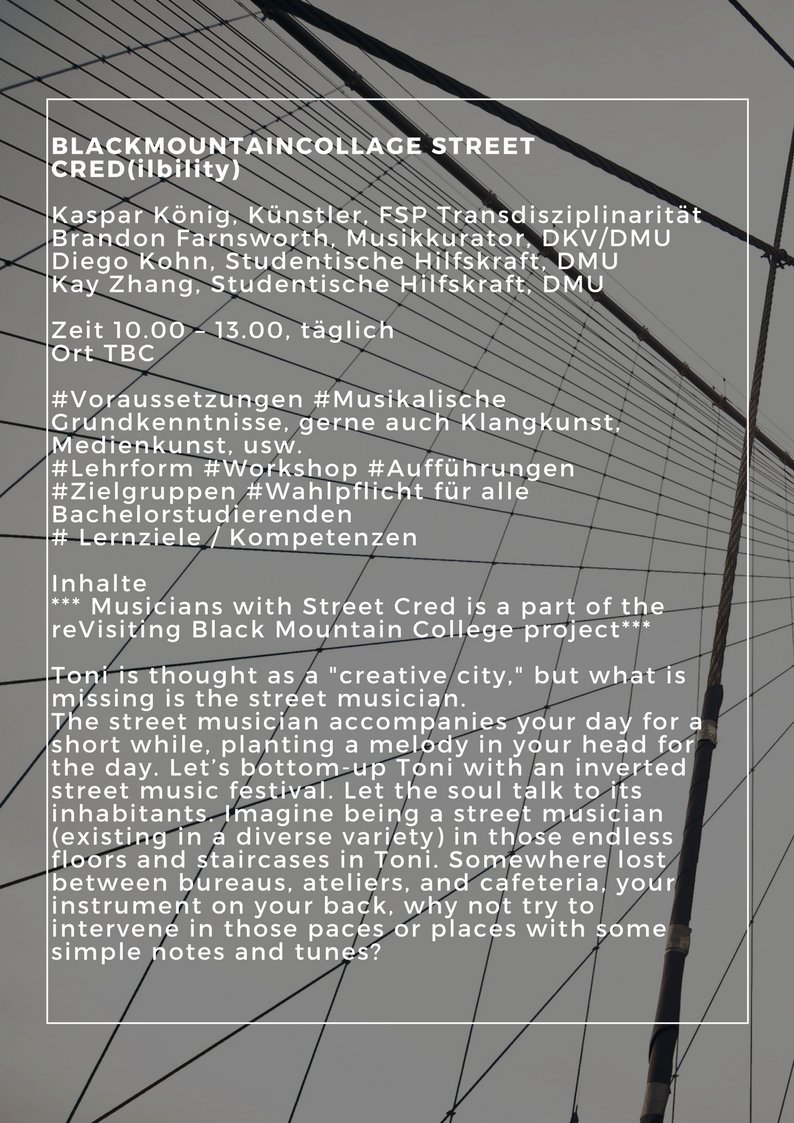
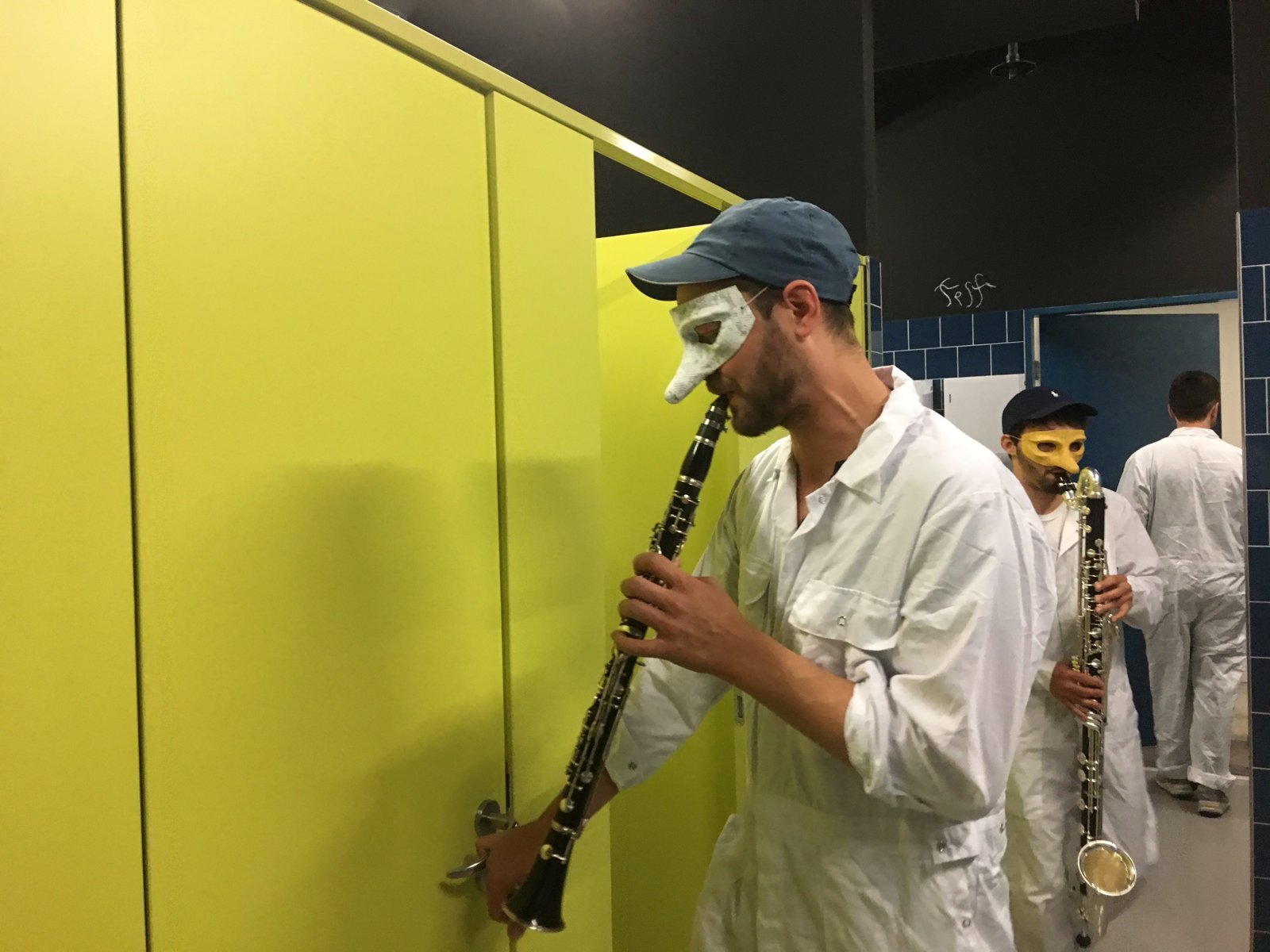
If the Toni-Areal, the building of Zurich University of the Arts, is a «creative city», where are its street musicians? For five days, improvising musicians left the rehearsal room and played in staircases, corridors, the cafeteria, the toilets and the parking garage. The building stopped being a neutral backdrop and became a partner in the music.

About the workshop

The workshop asked how improvisation can change the way we perceive a space, the way we listen to it, and our relationships with the people who use it. Participants learned to read architecture, acoustics and everyday movement as musical material, and to act without controlling their surroundings: a passer-by, an echo or a closing door could become part of the piece.

In the Cascade Project, the large staircase at the heart of the building became a living score. From different points of view, participants observed the flow of people (direction, speed, density, pauses, arrivals and departures) and translated it into musical decisions in real time.

The workshop was part of Revisiting Black Mountain, the 2018 programme in which the university looked again at the experimental pedagogy of Black Mountain College: learning by doing, working across disciplines, and connecting art, education and everyday life. It was not a historical reconstruction, but a contemporary experiment in dialogue with that legacy.
Five days

  • Improvising in a circle, chains of trios and «kick-out» games; Peter Ablinger's Weiss/Weisslich 3 to tune the group's sound to the room
  • Solos, duos and trios in staircases, a long echoing corridor, the parking garage and on the roof terrace
  • A silent soundwalk, a simple system of hand signs and short «guerrilla» interventions, each followed by a conversation about its effects
  • A blindfolded soundwalk in pairs to Escher-Wyss-Platz, playing there, and walking back with roles reversed
  • Final interventions throughout the building

Beyond 2018

The principles of the workshop (listening to a place, reading everyday movement as a score, short interventions agreed with the people who share the space) can be adapted to schools, universities, teacher training and other working environments.

Credits

  • ConceptKaspar König
  • Pedagogical design, development and directionDiego Kohn
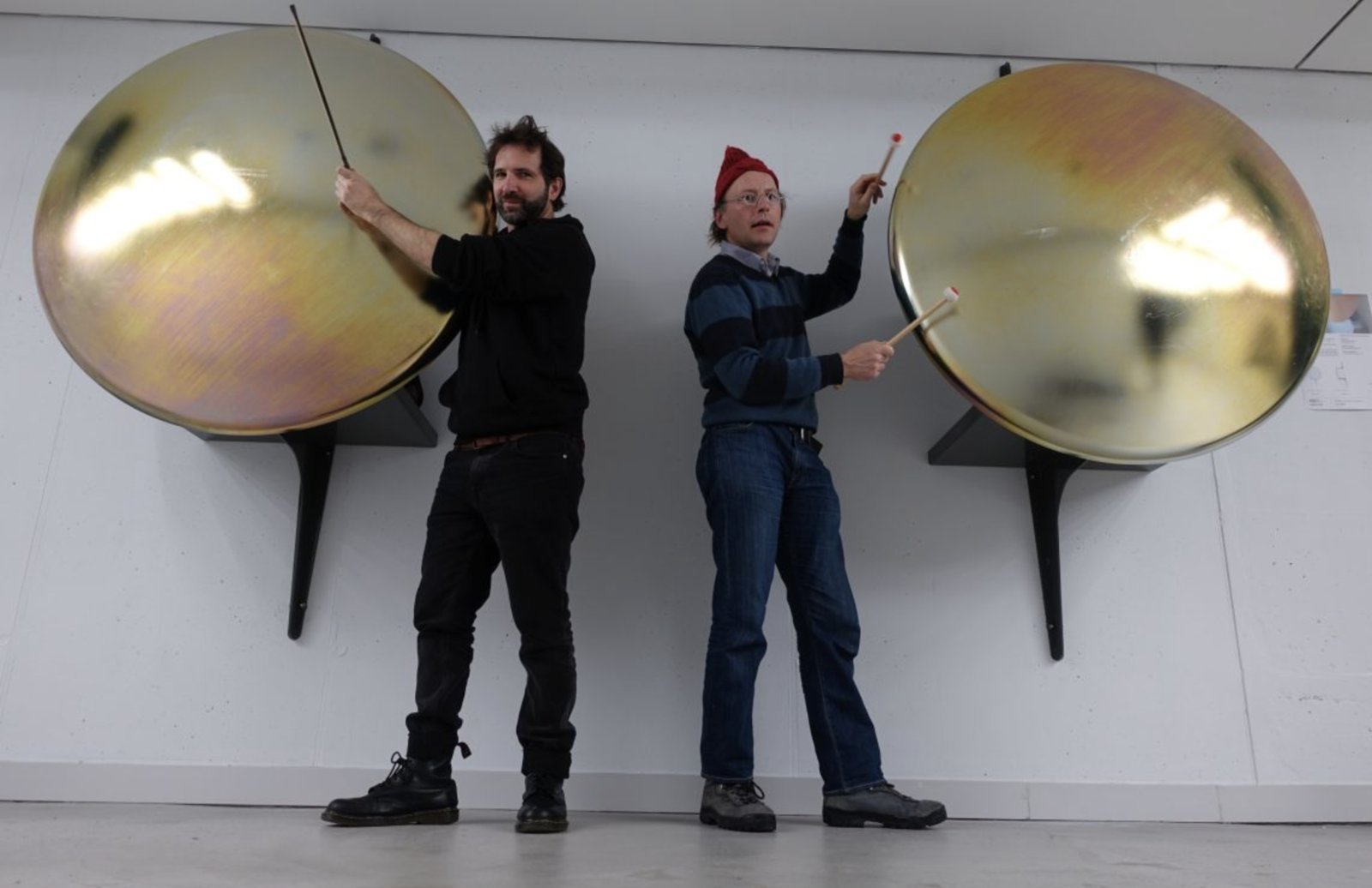
Diego Kohn and Kaspar König playing two large metal discs mounted on a wall in the Toni-Areal
Diego Kohn and Kaspar König in the Toni-Areal

The workshop on video: five days in the Toni-Areal and at Escher-Wyss-Platz

Final performance: a procession down the stairs of the university building

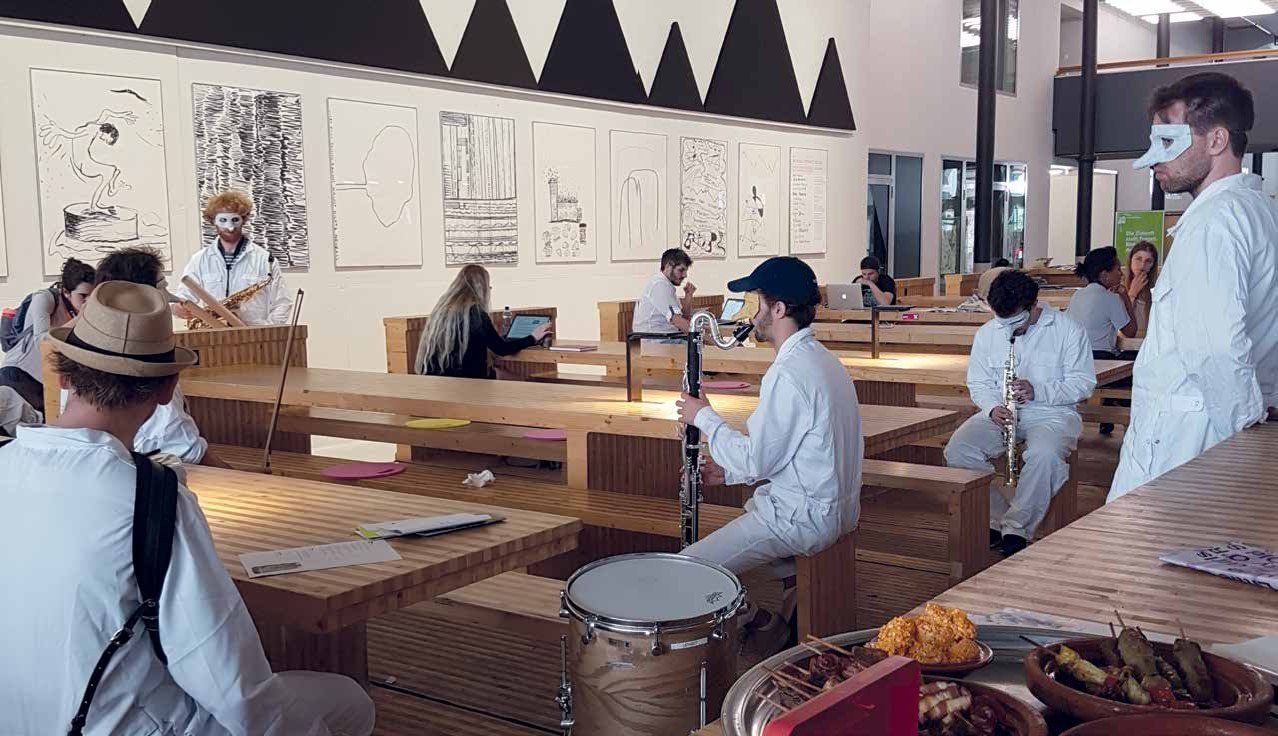
Masked musicians in white overalls playing among students working at the cafeteria tables
Intervention in the cafeteria. Photo from the documentation of Revisiting Black Mountain, ZHdK 2018
Workshop flyer, Musicians with Street Cred(ibility), Black Mountain College programme
Flyer
Participants walking in pairs, one of them blindfolded, along a path by the river
Blind soundwalk in pairs
A clarinettist and a soprano saxophonist playing under the bridge at Escher-Wyss-Platz, a tram behind them
Playing at Escher-Wyss-Platz
Masked musicians in white overalls playing in the toilets of the Toni-Areal
Intervention in the toilets

20162 entries

An independent workshop on collective real-time composition with signs, within the Darmstadt Summer Courses.

Links

A four-day course connecting system, language and play: a sign system for collective composition and a spontaneous group language.

Links

Course flyer, Kurs in Kompovisation, WIM Zürich, June 2016
Flyer