Lecture
Improvisation as Critical Practice in Higher Music Education
TRICK as Pedagogical Infrastructure for Inclusion, Agency, and Listening
Can everyone improvise? This talk shifts the focus from what to play to the conditions for playing together.
Abstract
Much of higher music education is still organised around correctness and control. In this setting, mistakes become a threat rather than material, and the freedom of improvisation is unevenly shared. Some students expand, others hold back.
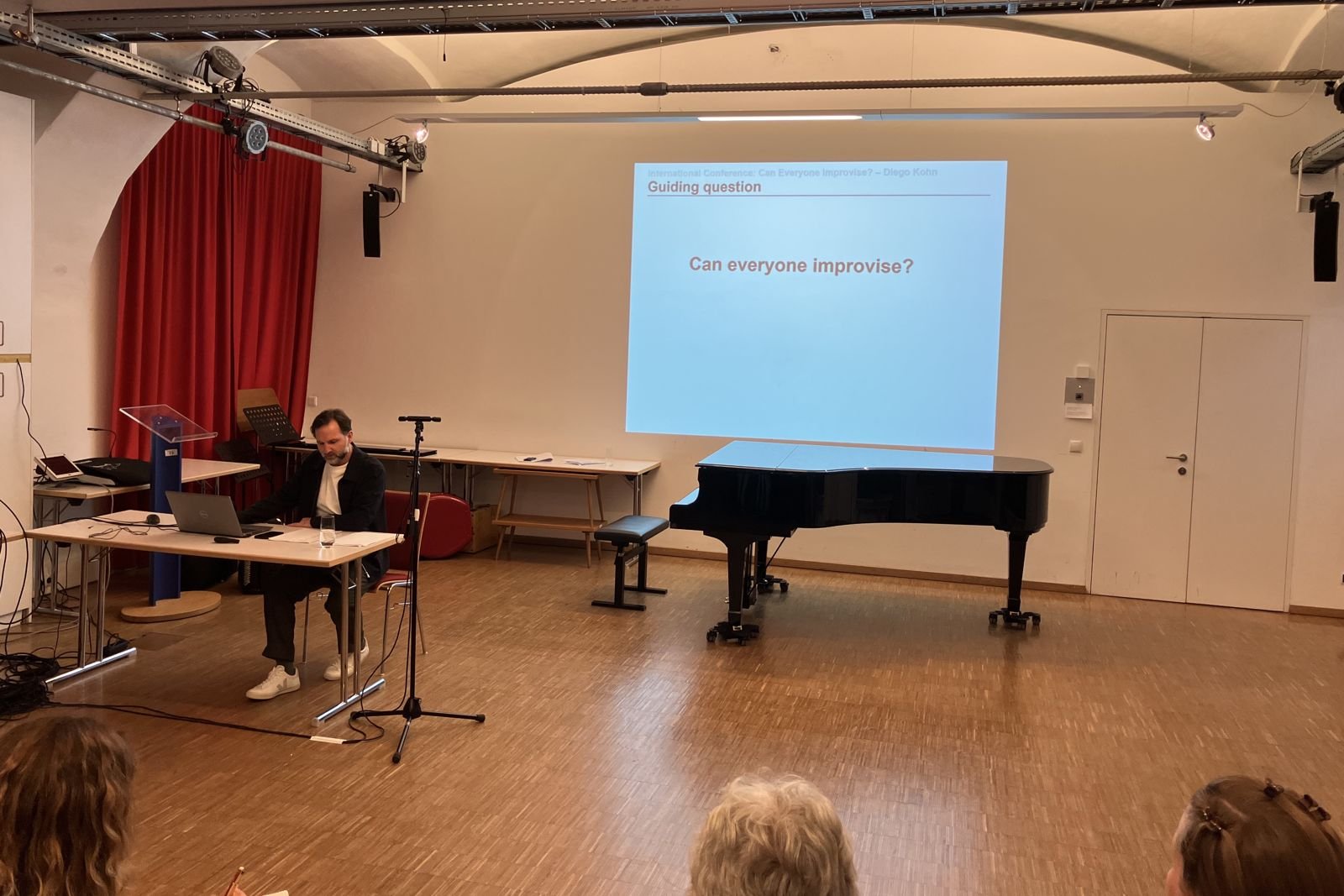
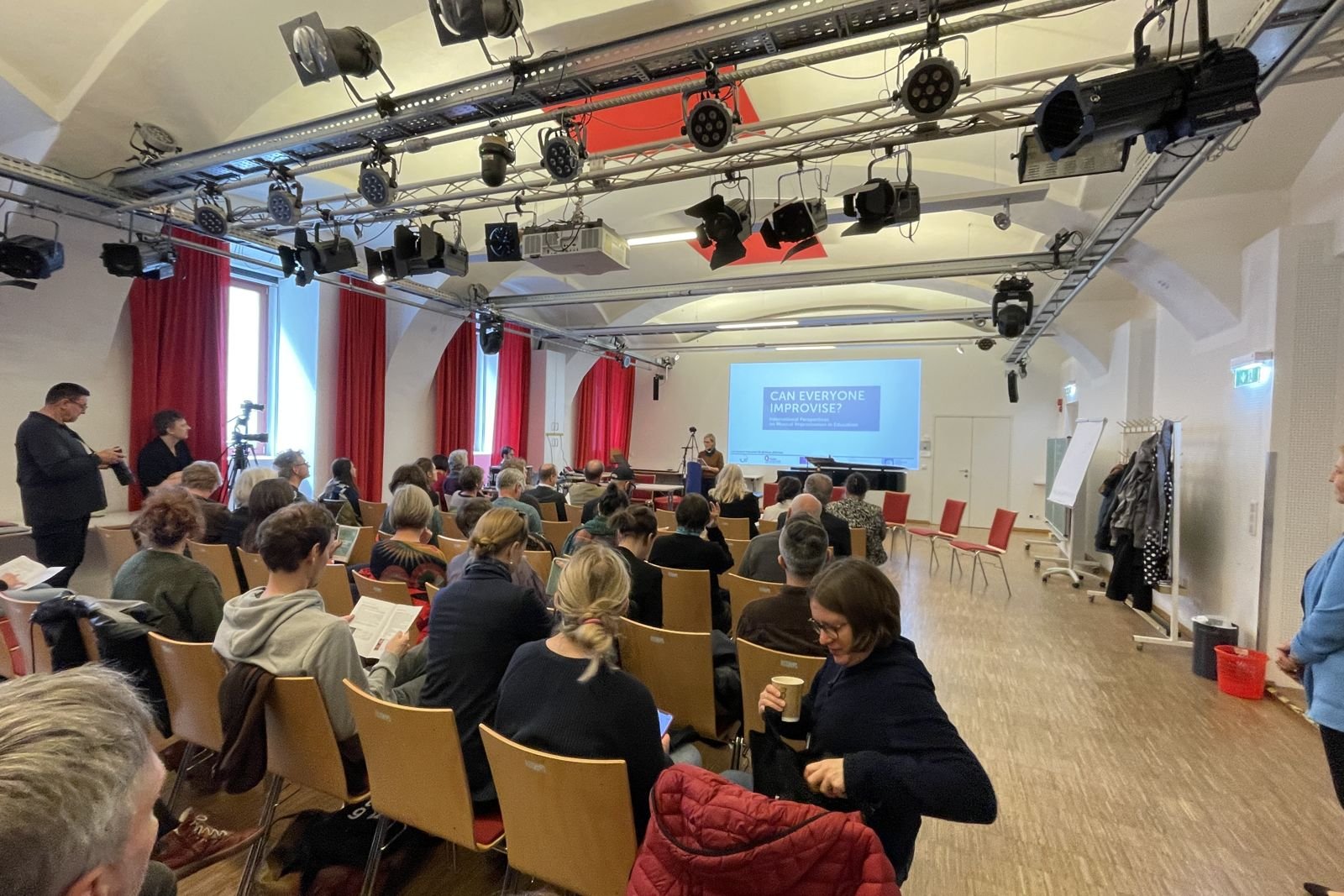
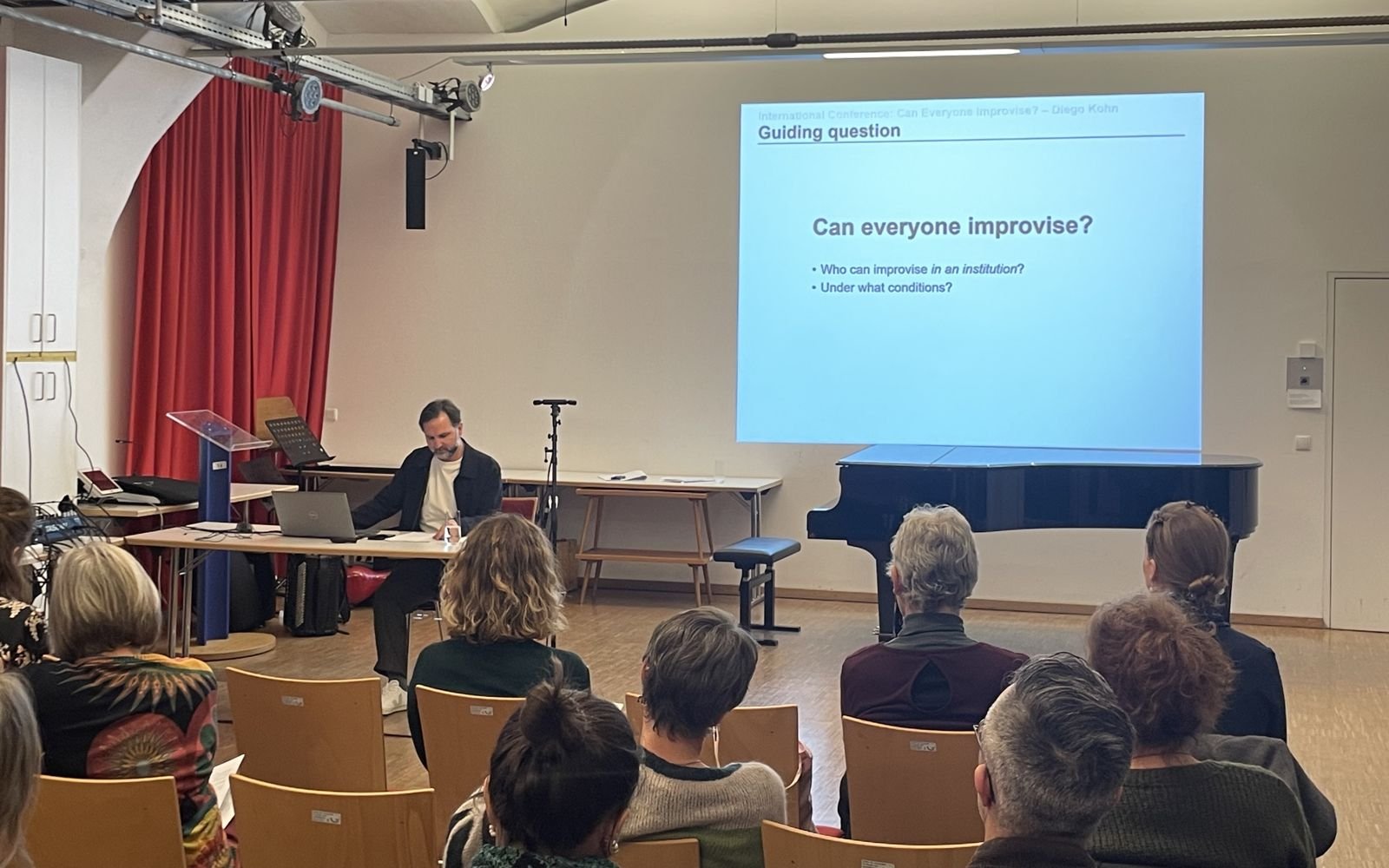
This lecture was given at the international conference Can Everyone Improvise? at the University of Music and Performing Arts Graz (KUG) in March 2026. Starting from the conference's title question, it asks who can improvise inside an institution, and under what conditions. It describes three things that happen when improvisation works as a critical practice. Hidden norms become audible, agency is shared among the players, and quality is measured less by correctness than by listening and responsiveness.
For this to happen consistently and not by chance, the talk presents TRICK (Trust, Respect, Independence, Collaboration, Kindness), a framework developed by the educator Esther Wojcicki and adapted here for teaching improvisation. TRICK does not define what to play. It defines the conditions for taking part. Three classroom exercises show how it works in practice. The lecture closes with a question for institutions: what would it take for improvisation to become a structural part of music education rather than a decorative one?
Video: University of Music and Performing Arts Graz (KUG)
Full lecture and materials
- Watch on VimeoVideo
- SlidesPDF
- Conference websiteKUG Graz